Categories
co-production research

Visiting SRC: a place for ‘yes we can’

It’s been a while, and I’ve been busy. In spring I visited the Stockholm Resilience Centre for three months, spending time with my dear friend and brilliant researcher María Mancilla. Sharing my experience with a friend last week, I said I felt my wings unfolding during my time there. A weird sentiment for a mid-career who spends most of her energy in the publish or perish hamster wheel. I was asked, what exactly made you feel that way? so I thought of leaving some notes here, in case it inspires those interested in transdisciplinarity as a research culture.

The first thing, on the very first day, that stroke me were the Speed Talk sessions. One hour every Monday, the whole centre attends, even the management team. A simple format that works for many purposes: learning about what others do; practice public talking by sharing your work, ideas, desires, whatever!; updating the centre’s agenda; transparency and accountability; introducing new people. All of which nurtures a sense of community and belonging. I was thrilled by Line Gordon’, SRC director, management updates at the end of the sessions, how she conveyed messages of empathy and self-care in a very demanding profession.

If I were to decide on the predominant collective feeling I perceived during my time there, I’d choose pride. People are proud to be part of SRC, they feel represented by, and representing, the centre. They align with its vision and values, and know how to contribute to making them real. There were messages repeated every now and then like ‘it is researchers who make possible collaboration and transdisciplinarity everyday’. They share this responsibility together.

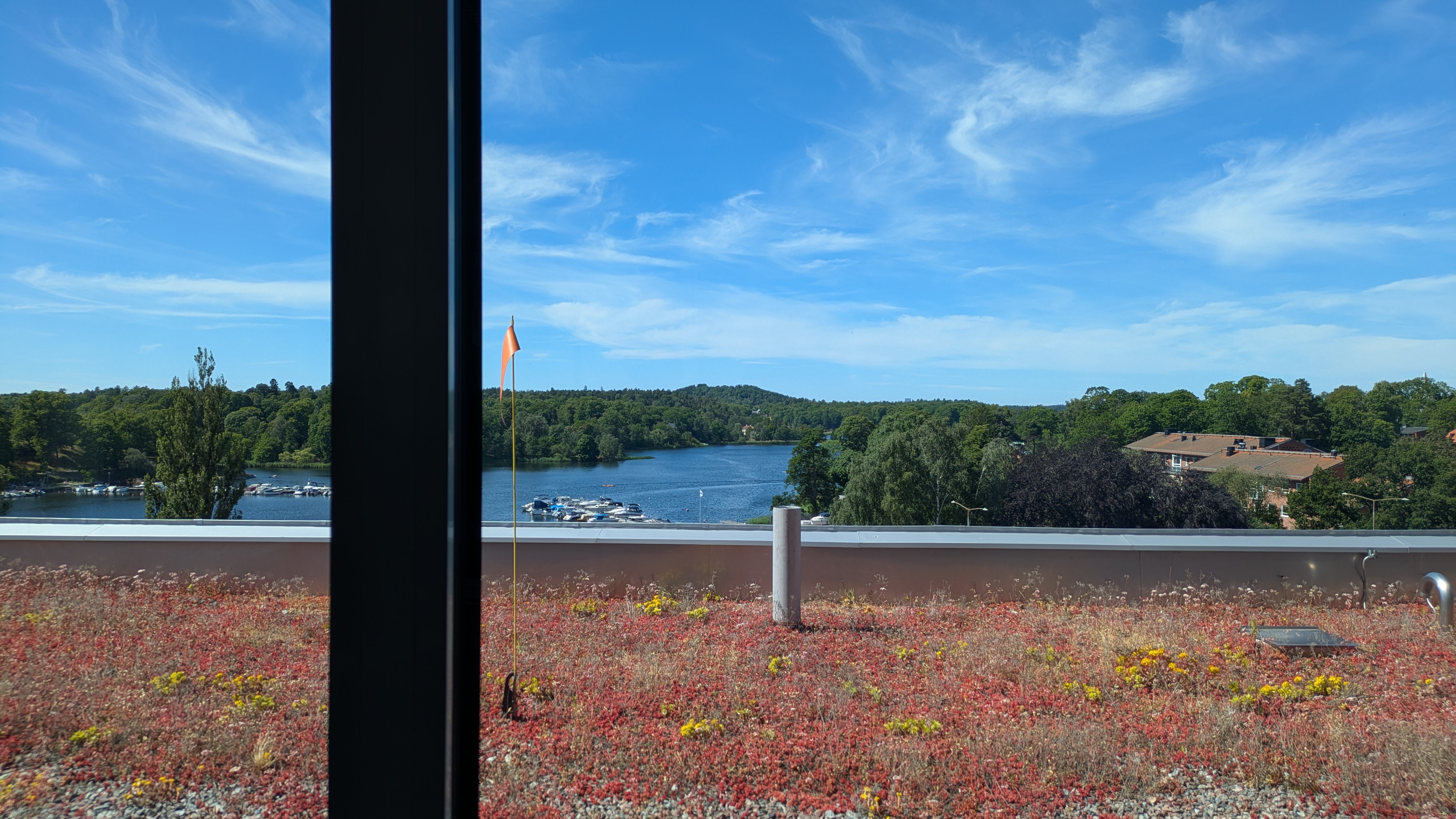
The centre structure contributes too. SRC is designed, materially and politically, to flat academic hierarchies. All spaces are open, in hot-desk mode, only those with special needs have private offices. There are plenty of rooms for meetings, nice kitchen and living room, sofas and comfortable corners all around, walls decorated with arts and pics made by researchers. And of course the views to the beautiful Brunnsviken Lake. It’s just cool to be there.
There are no permanent ‘research lines’ or groups, everyone is welcome to collaborate with everyone and researchers organise ad hoc teams for each project. The management team holds strategic decision-making power. Among other things, they decide on the quinquennial research areas structuring collaboration and learning across disciplines within the centre. These themes are led by a team of middle career reseachers with a dedicated budget to organise training and collaborative activities to which anyone can attend. For instance I contributed to the themes on ‘Conflict & Collaboration’ and ‘How to do sustainability science’ with a practice session on conflict facilitation in transdisciplinary processes and a presentation of my research in the Mar Menor.

But collaboration is not only a matter of care and good vibes at SRC. It is also a matter of impact. The centre is committed to advance sustainability transformations across the world by collaborating with all relevant actors. Undoubtedly, the highly qualified communication team makes a great difference here. I participated in a session with representatives from Swedish food retailing companies to discuss how they can hep promote more sustainable vegetable production in the Mar Menor area, with Amanda Jimenez presenting the impressive work of the XPaths project. I was honored to share my work and the problems of this region with so important and difficult to reach actors.

Last but not least, there was fun. SRC people of all ages love celebrating and apparently parties are legendary. While I was there, first year master students organised a summer party within the centre facilities to commemorate their second year colleagues’ graduation. It was full of care, pride, tears, good food and community. We danced for hours while the sun barely set on the lake. I really enjoyed that moment, I thought that bodies dancing together is just what sustainability research needs.
Categories
co-production Mar Menor research socionatures

Speculative natures: this changes everything

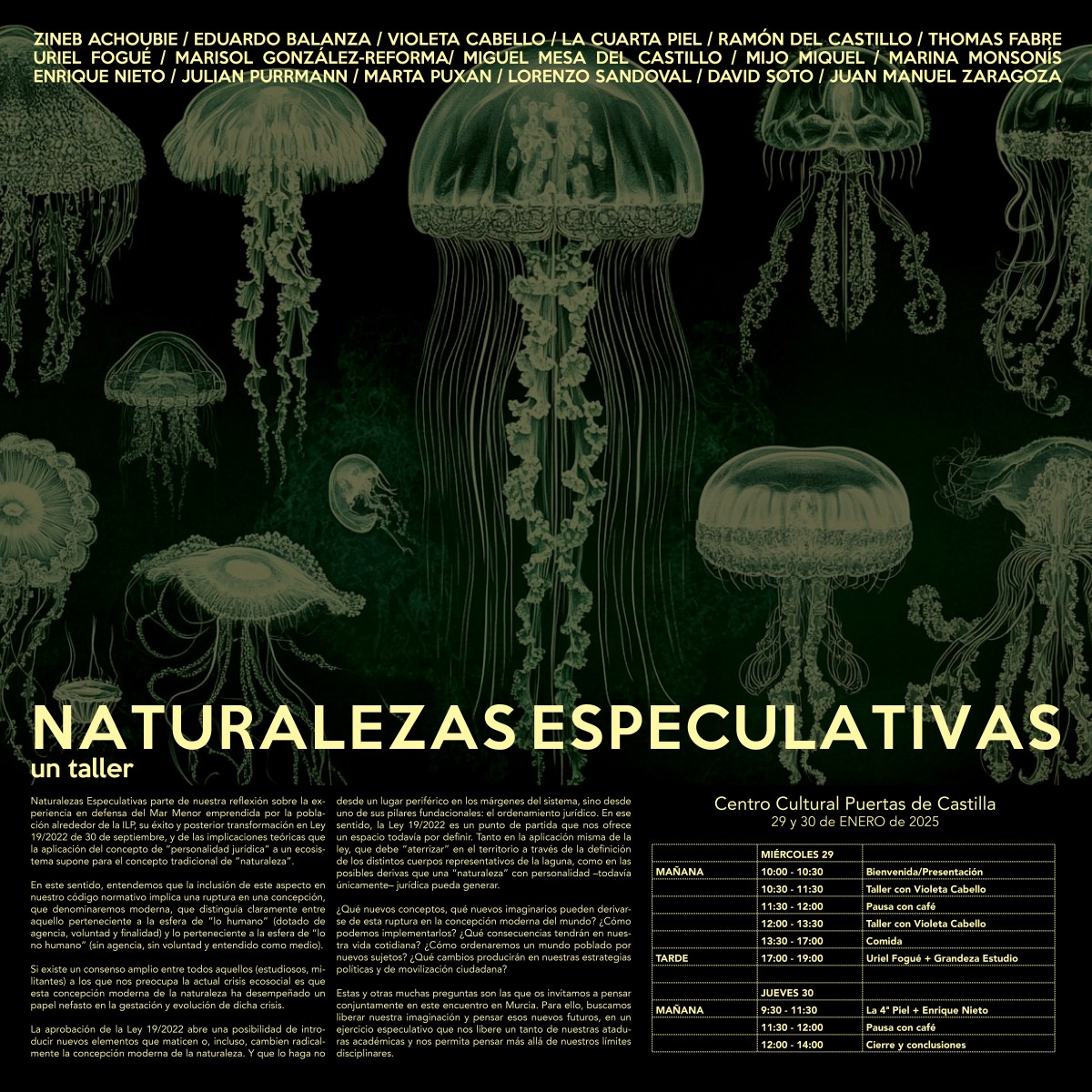
Program of the workshop Speculative Natures, organised by the ehColab in Murcia, January 2025. Author: Miguel Mesa del Castillo.

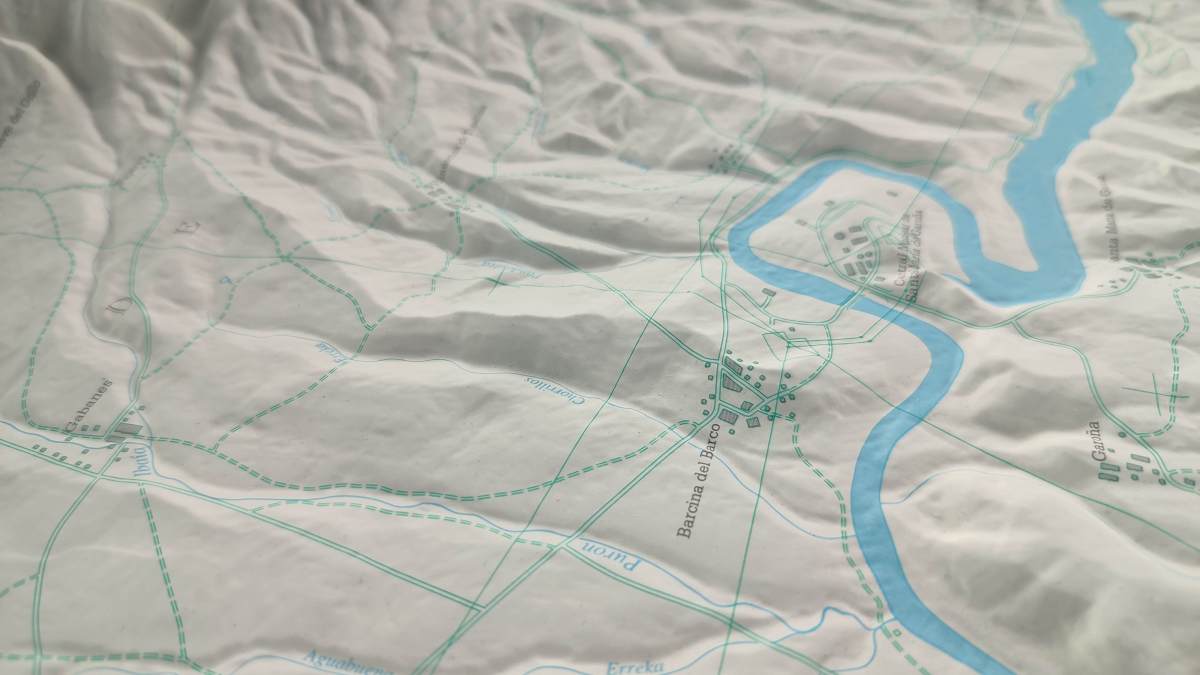
My colleagues from the ehColab in Murcia, Juanma Zaragoza and Miguel Mesa, invited me to participate the workshop ‘Speculative Natures’, organised in the frame of the Ant-Mentalhealth project, and facilitate a participatory activity. When I asked what they expected from the session, their framing was: we want to explore what it means to consider natures as people, as subjects with rights, what does it change? We are triggered by the experience of the Mar Menor being granted the legal personhood status, but we dont want to bound the session to this place.

The first thing that came to my mind was the session ‘Systems sensing in organizational complexity’ in the Transformations conference 2023 in Prague I had the pleasure to join. It was facilitated by Justus Wachs & Luea Ritter and focused on what they call systems sensing: ‘a visceral aptitude that draws on innate human capacities for being in relation with, listening deeply to, and momentarily embodying the elements of a system’. This quote is extracted from a paper they published in the Social Innovations Journal systematizing their experience, which I was immensely happy to find and get inspiration from. This post is meant to be a record of how I adapted their methodology for anyone interested in using it in the future.

A second source of inspiration was brought by Juanma, who is a huge expert in Bruno Latour. It’s the methodology developed by the consortium Où atterrir ? to explore new ways of describing territories as holobionts, by describing dependencies composing locals with distant peoples and activities, who might be threatened by those dependencies without us knowing.

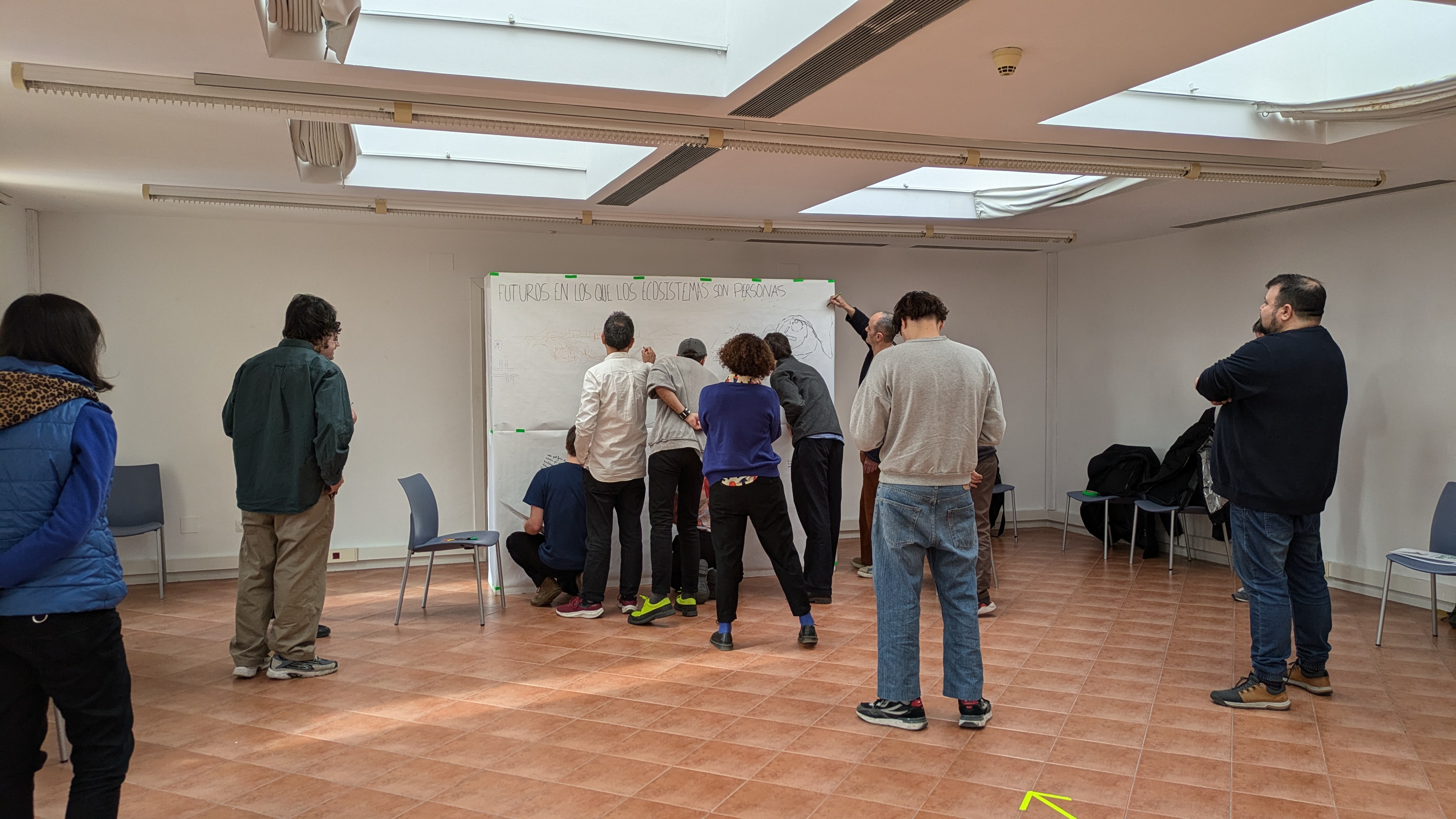
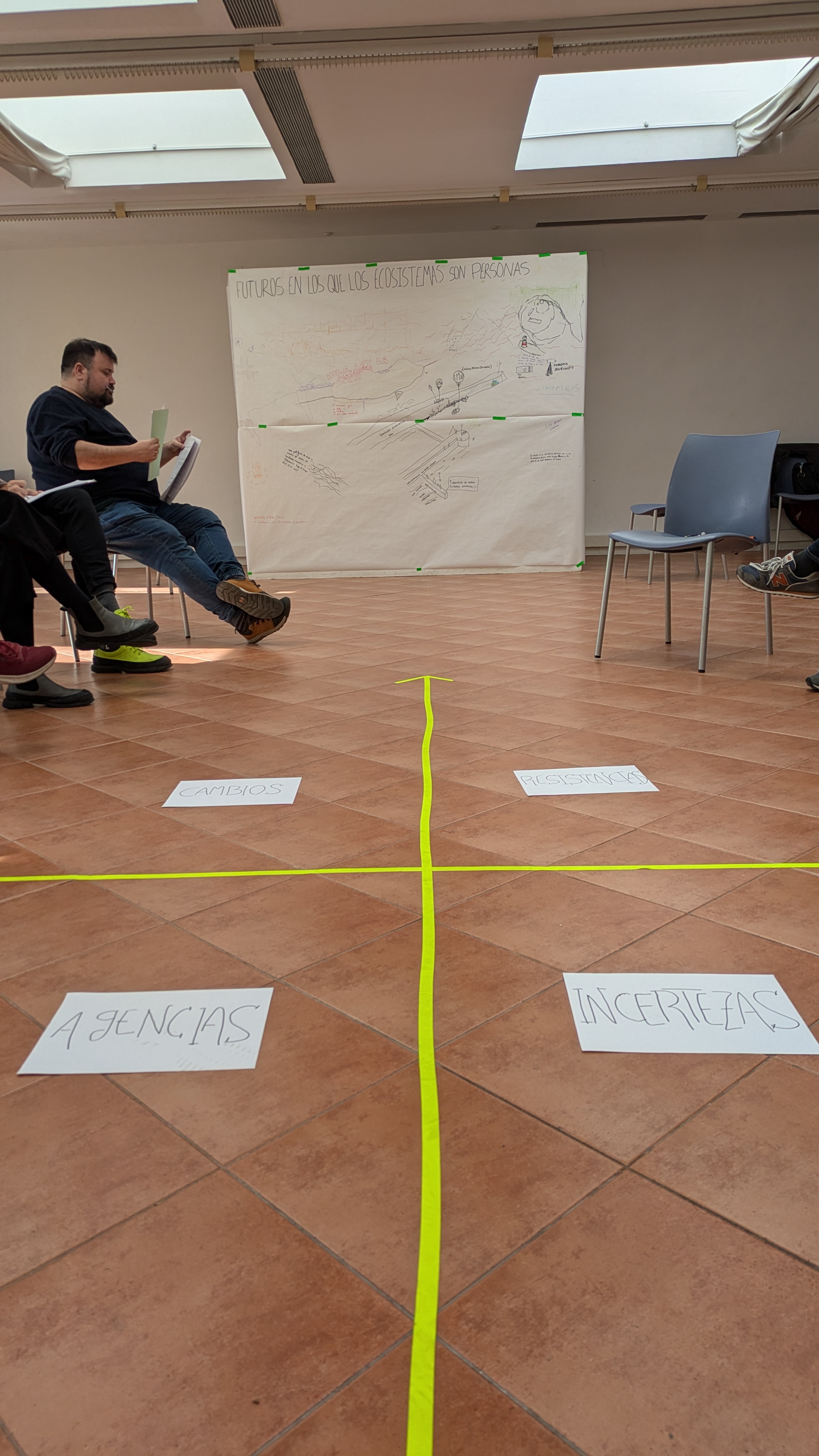
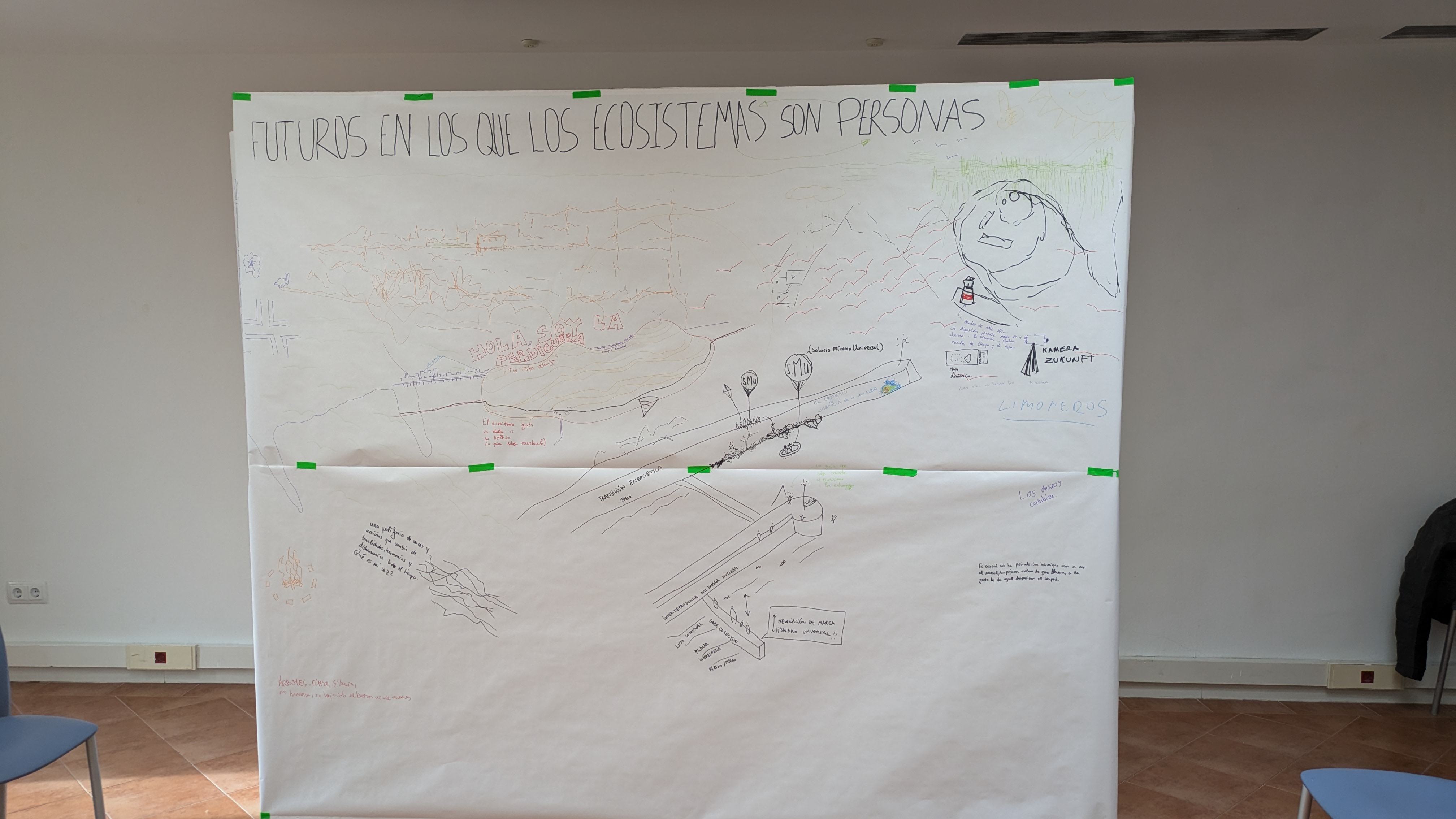
Connecting these two methods, I planned a session in two parts, moving from an embodied experience towards a structured dialogue. The first part was meant to explore the question: futures in which ecosystems are people, how do they look like? Following Justus and Luea, we started with some exercises from Theory of the Oppressed to tune up our bodies and sensory capacities. Moving throughout the room, participants were invited to shift a few times back and forth from their inner attention towards the group and the room. Then they played with different walking paces and with stopping to talk with one person while keeping their attention to the group.

After warming up, we entered a guided visualization inspired in constellations as described by Justus and Luea in their paper. Participants chose a place in the room from which they jumped to another spot to visualize a concrete territory in which ecosystems are people. The exercise was repeated several times, following these questions:

  • Observe: How is this territory? Where does it end? What’s in there, what beings, entities or things? How are their relations, their dependencies?
  • Feel: How are you related to this territory? Are you close or far away? Are you an observer or a participant? What does this territory mean to you?
  • Speculate: What resources and material, affective, political agencies do ecosystems-persons have in this territory? maybe there are people willing to take care of them, or institutions that protect them…
  • Analyze: What are the resistances to ecosystems being considered and cared for as people? maybe there are groups feeling marginalized, lobbies exerting pressure, legacies of the past…
  • Jump: make a movement that symbolizes for you the lever that allows this territory to exist. When you arrive, explore for a few minutes how is the path to arrive to this territory…

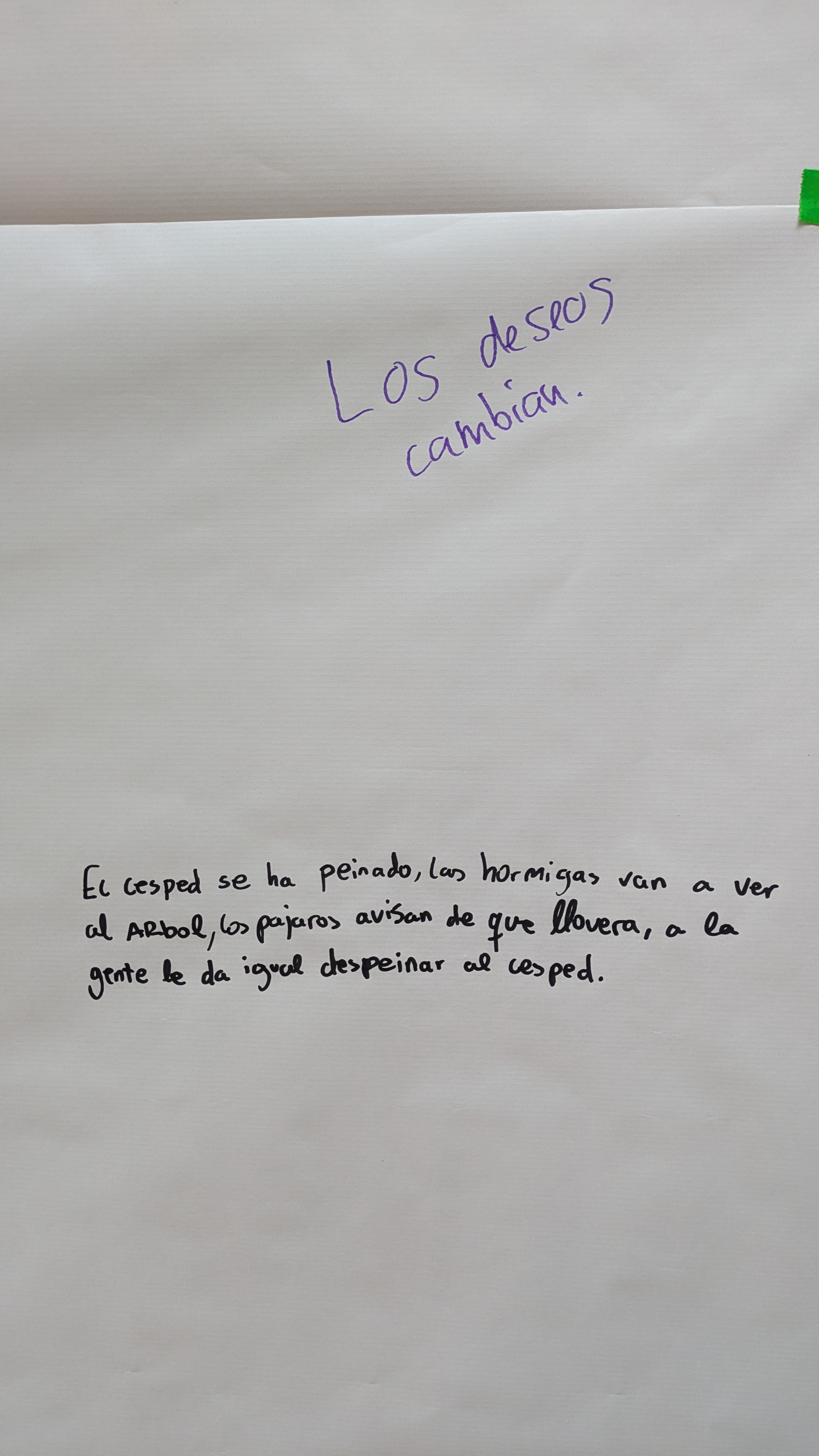
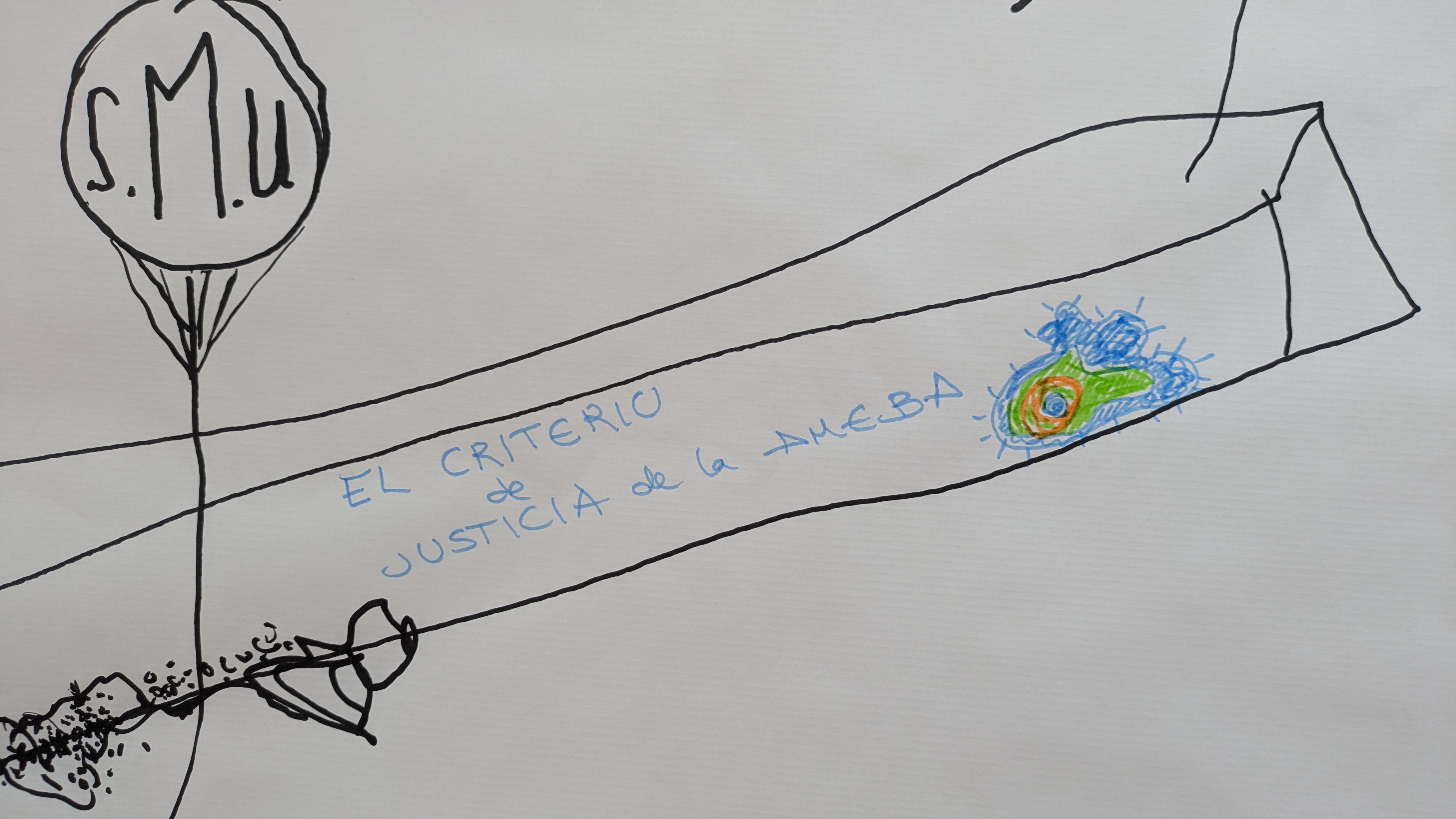
The journey was done individually and in silence. Participants could move and make noises, but the idea was avoiding talk to give space to other types of information. After the last jump, they were invited to draw together in a wall paper, still in silence, whatever they liked to capture their experience.

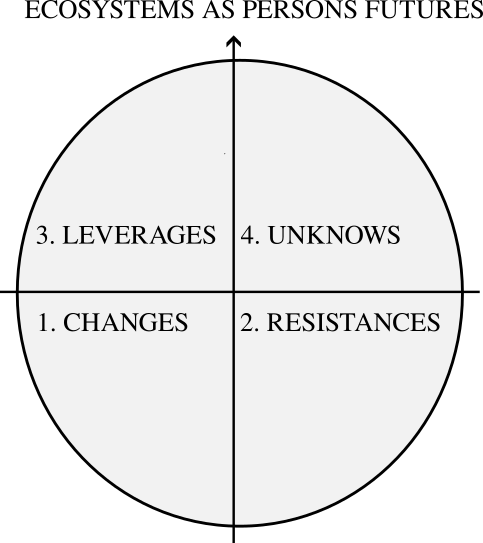
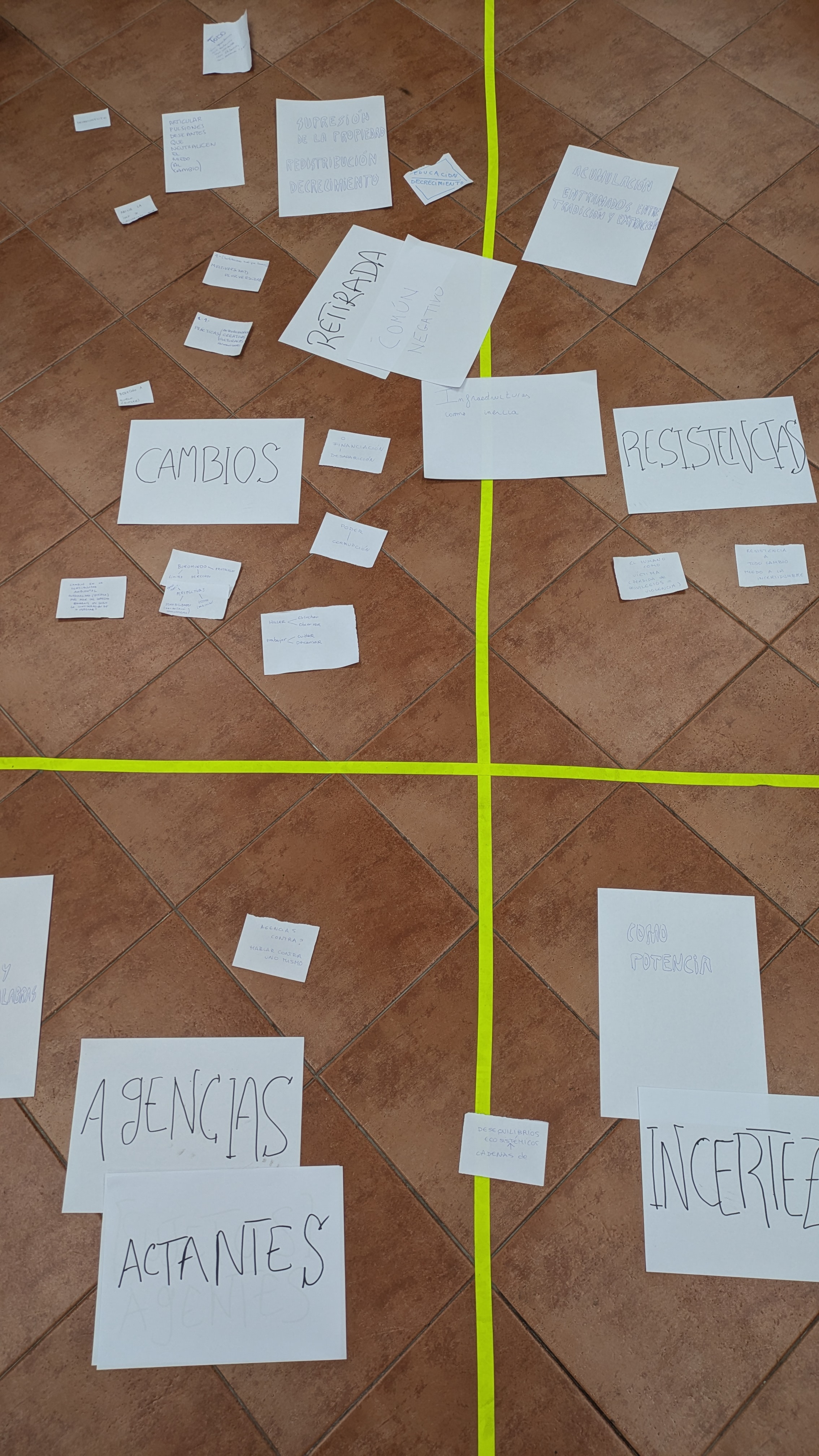
The second part opened a collective conversation about: What changes do futures in which ecosystems are people bring forth and how do we drive them forward? Here we drew on the four-quadrant method of Où atterrir ?, rephrasing categories in:

  1. Philosophical, political, scientific, artistic transformations
  2. Resistances, barriers and push backs
  3. Resources, agencies and actions that can be activated as levers
  4. Uncertainties, known unknowns, questions that arise

We spent some time discussing and reframing the categories before entering the conversation. I did not audio record and cant really summarize the discussion 2 months later. I recall the 1 hour time felt quite short, as there’s much to discuss on this new matter of concern. I also remember one of the final sentences from Juanma, that really gives me hope: to me, this changes everything.

Categories
aqua co-production open knowledge research

Agua, conflicto y transición ecológica

Fuente: Sobre meandros y cascadas o cómo inundar el correr del río. Autoras: Belén Cerezo Montoya y María Rosario Montero

He tenido el enorme placer de coordinar el número 20 ‘Agua, conflicto y transición ecológica’, de la revista Pensamiento al margen, editada por mi querido amigo Juan Manuel Zaragoza desde la Universidad de Murcia. El número se centra en la transición hídrica en el contexto de las políticas públicas españolas y cuenta con once artículos de investigación y una reseña del magnífico libro Memorias Ahogadas, de Jairo Marcos y M.ª Ángeles Fernández.

Las autoras y autores que han contribuido representan una amplio abanico disciplinar, con fuertes dosis de ecología política, geografía, ciencias políticas y ciencias de la sostenibilidad, pero también con aportaciones desde la sociología, el derecho, la antropología, la investigación artística y la práctica de transformación de los conflictos del agua. Parte de los y las autoras comparten posiciones cercanas a la comunidad epistémica de la nueva cultura del agua. Hay por tanto conceptos y asunciones a lo largo de los textos que forman parte de su acervo común, como la defensa de los valores ecosistémicos y patrimoniales del agua. Todas ellas operan en las zonas grises entre la academia y la acción política transformadora en sus diversas manifestaciones, desde el engranaje con movimientos sociales a la interacción con la política pública, pasando por distintas corrientes de ciencia socioecológica co-producida.

A modo de introducción, esbozo una contextualización histórica y conceptual para las lectoras no especializadas en gobernanza del agua, con el objetivo de situar la idea de ‘transición hídrica’ como un tercer momento en la evolución de las políticas del agua estatales, siendo los dos primeros la denominada ‘misión hidráulica’ y la ‘gestión integrada’ bajo la Directiva Marco del Agua. Defiendo que este nuevo momento requiere poner atención a la intersección entre los riesgos del cambio climático, el deterioro de los ecosistemas acuáticos, y la persistencia de problemas de escasez hídrica, contaminación e insuficiente ordenamiento territorial. Todo ello en un contexto de conflictividad, polarización política y afectiva crecientes, donde las prioridades parecen estar virando lejos de la agenda verde.

Para dar cuenta de los debates en torno al avance de la transición hídrica, el número incluye aportaciones teóricas y análisis empíricos, cubriendo temas como la gestión de las sequías y las inundaciones, la transición hídrica justa en el medio agrario, una radiografía de la opinión pública española en torno a las políticas hídricas bajo el cambio climático, los conflictos asociados a la falta de planificación en el aumento de las demandas, al deterioro de ecosistemas emblemáticos o a la transformación de múltiples ‘formas de ser’ fluviosociales. Incluye también un ensayo visual de las investigadoras en artes Belén Cerezo Montoya y María Rosario Montero, autoras de la imagen de cabecera de este post.

Todos los artículos están publicados en acceso abierto, así que animo a navegarlos y disfrutarlos. Feedback siempre es bienvenido!

Categories
co-production research socionatures

IntegrateNbS – Exploring the transformative potential of nature based solutions

Uretamendi, December 2023. Border between houses and gardens.

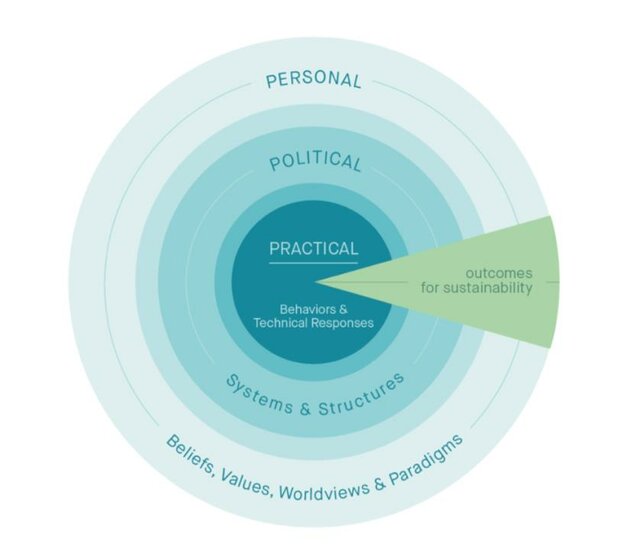
The IntegrateNbS project kicked off in January 2024. Funded by the Driving Urban Transitions partnership, the project aims to explore the ‘transformative potential’ of so-called nature based solutions (NbS) in urban planning. We work with the 3 Spheres for Transformation framework proposed by Karen O’Brian and Monica Sharma and count with the support of cChange as consulters expanding the application of this framework worldwide through their succesful Transformative Leadership for Sustainability program.

In a nutshell, the 3 Spheres framework considers that for sustainability transformations to be effective, they need to happen at three interconnected levels: the practical interventions in the world, at institutional systems and structures and in peoples values, beliefs systems and worldviews. From this lens, a practical intervention like a NbS could be more transformative if changes are induced in the institutions and policies planning for it and in the values of people affecting and affected by it.

IntegrateNbS aims to contribute to an identified knowledge gap concerning the consideration of social dimensions, such as equity and justice, in the design and implementation of NbS. Its main output will be a co-creative methodology, the ‘IntegrativeLabs’, to include such dimensions when developing NbS. We have 6 case studies in 4 European countries (Norway, Sweden, Poland and Spain) in which we will test this methodology to accompany existing NbS planning processes.

What I really like from this process is having cChange as internal coachers helping as build a solid foundation for an interdisciplinar and intercultural collaboration. We have internally applied the 3 Spheres framework to organise ourselves as a team. We will also apply it as the baseline for designing the Integrative Labs. I dont often work from pre-defined frameworks but I see value in this heuristics that is sufficiently simple to give room to diversity, while sufficiently complex to enable collective comprehensive thinking.

The Spanish team at the Basque Center for Climate Change is working with two case studies. First, in a pheripheral neighbourhood in Bilbao, Uretamendi, self-constructed by migrants that came from other parts of Spain to work in the industries during the 50-60s. It is literally a village carve up in the mountain, an ecotone between the urban and the forest (see pic at the beginning of the post). Our research in Uretamendi will focus on understading how people relate to nature in the area and how this can inform local council plans for renaturalization.

Second, we are working with the EbroResilience Strategy, a large scale policy initiative involving 5 public administrations to transform flood risk governance in the middle Ebro river. EbroResilience has been implementing NbS for the last 5 years as a new way of co-habiting with the river rather than attempting to control it. Yet, this shift to NbS has triggered strong confrontation and conflicts that are being attended through an ambitious participatory and conflict transformation program. The work with EbroResilience will be a collaboration to developing an evaluation framework and assess the transformative potential of their participatory strategy, a framework that will be later applied to the other case studies.

Categories
co-production Mar Menor reflections research socionatures

Ecotono: compartiendo diálogos sobre el Mar Menor

Todo lo que empieza acaba y a mi investigación en el Mar Menor le va tocando cerrar. Después de dos años y medio de intenso trabajo de campo, ahora llega un tiempo de reposo, lectura, digestión, análisis y escritura.

Eso sí, hemos hecho un esfuerzo por compartir el proceso y los primeros resultados. Con mucha alegría publicamos la web del proyecto Diálogos Compartidos / Shared Dialogues, que culmina la investigación participativa y la expande con una exploración de herramientas visuales para contar algunas de las reflexiones que hemos recogido o provocado en nuestros encuentros.

Además, escribimos dos breves textos que recogen las conclusiones principales de la investigación respecto al problema del Mar Menor y respecto a cómo fomentar la participación social.

Por último, la guinda del pastel, una preciosa publicación que recoge las historias que hemos elaborado junto a la artista visual Josune Urrutia y mis compis de investigación Paula Novo, María Mancilla, Marcela Brugnach y Paula Zuluaga. Después de darle muchas vueltas la llamamos Ecotono pues al ordenar las historias buscamos esas zonas intersticiales en las que friccionan las dicotomías respecto a lo que se dice, se siente y se hace en el Mar Menor. Esperamos que os guste.

Imagen del cangrejo azul. Josune Urrutia.

Categories
aqua Mar Menor publications research socionatures

Why uncertainty matters in environmental degradation? The Mar Menor case (VI)

Our latest paper analyzes the narratives and uncertainty surrounding the dispute over the overfertilization of the Mar Menor lagoon in Spain. Harmful algal blooms, dead zones, and fish kills are the results of eutrophication – a process that occurs when the environment becomes enriched with nutrients, mostly nitrogen and phosphorous, increasing the amount of plant and algae growth to estuaries and coastal waters.

The Mar Menor lagoon is a protected aquatic area in Southeastern Spain that has been receiving nutrients from poor sewage systems and fertilizers over the last five decades. Early in the 2000s, scientists started warning that the lagoon could become eutrophicized. In 2016, its waters turned green when algal blooms killed off 85% of the vegetation on its seabed. Later in 2019, an event of anoxia – depletion of oxigen in the water – produced tons of death aquatic biota.

In this study, we explored the narratives that explain the causes and potential solutions to the lagoon’s crisis. Results show two increasingly polarized narratives that deviate in the causes for nutrient enrichment and the type of solutions seen as effective: (1) intensive agriculture is the main driver for the Mar Menor eutrophication; and (2) the lagoon has many and complex pressures, agriculture is only one of them.

We further analysed the role of uncertainty in this polarization dynamics. Findings revealed how different uncertainties are mobilized to dispute the centrality of agriculture, like the lack of data on water and fertilizer use or a scientific controversy over the contribution of groundwater to nutrient discharges to the lagoon.

This research contributes to understand eutrophication as an intertwined social-ecological phenomena and how knowledge generation can contribute to sharp polarization. We conclude that different inter- and transdisciplinary approaches may be needed to collectively unpack existing uncertainties.

Cabello, V., Brugnach, M. Whose waters, whose nutrients? Knowledge, uncertainty, and controversy over eutrophication in the Mar Menor. Ambio 52, 1112–1124 (2023). https://doi.org/10.1007/s13280-023-01846-z

Categories
research

2023: Starting Ramón y Cajal Fellowship

Happy new year! This is a very special moment for me because I am shifting from a 3 year position as Juan de la Cierva to a 5 year position as Ramón y Cajal Junior Fellow…

It might not seem such a bit leap, but it means a world to me. First, it means leaving precarity behind in terms of salary, it brings relief due to more stability and motivation because I can now lead my own projects. Overall, it means autonomy as a researcher and the outlook of having a future in this profession. Since I will remain at BC3, it also means a stronger sense of belonging to this community and a feeling of responsibility towards its vision and organisation.

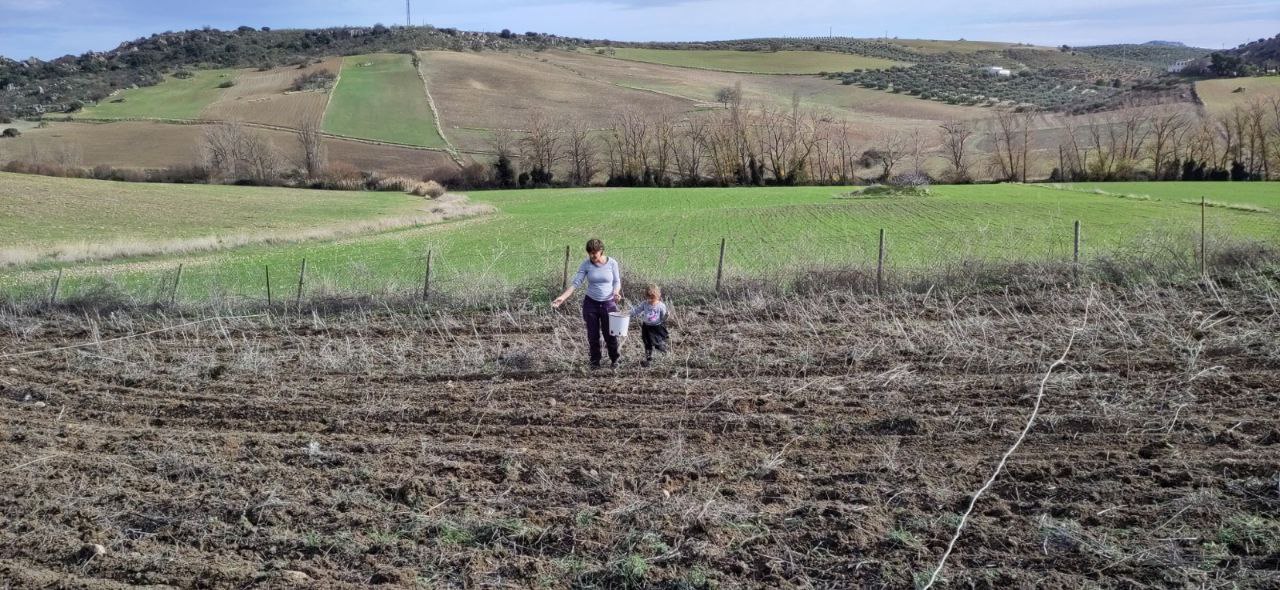
It also means renouncing to other possible pathways, at least for the moment, like facilitation outside academia or returning to my beloved rural life. This is something I hesitate about every time I visit my family in Cuevas del Becerro. I spent new years eve seeding old wheat varieties that my brother is trying to rescue for a food sovereingty project. I hope the seeds I plant as a researcher will also grow and feed other transformations.

I need to design my research plan for this new period. I am still finishing the knowledge coproduction process in the Mar Menor and have plenty of material to publish. My idea is to continue exploring how to bring about transformations in situations of conflict and societal polarisation associated to ecological transition policies. But I let the new emerge from the learnings in the Mar Menor, which are inmense.

My best wishes for 2023.

Categories
feminisms research

Gender & Diversity in academic organisations

This seminar was organised as part of BC3 Equality program. The program aims to promote more diverse and inclusive academic practices at our center. The two talks by @federica_ravera/Irene Iniesta and @AnaGalarraga1 were very complementary and provided relevant insights on how to incorporate violet lens in scientific research and communication.

It run in Spanish but for some misterous technical issue the video could only been published in its English translation. The beautiful graphic recording is the art of @EKontact.

Categories
co-production publications research

New publication: Quantitative Story-Telling of alternative water resources

I am happy to start the new year by sharing a cherished paper I have been working on along this pandemic year, now openly available in Sustainability Science.

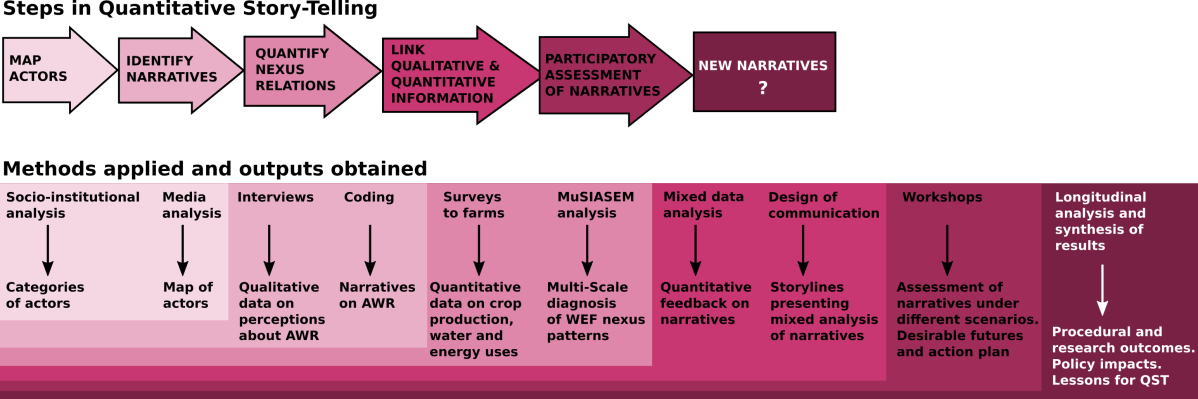
We take a procesual perspective to explain the methodological operationalization of the Quantitative Story-Telling approach in a case study in two of the Canary Islands. The research focussed on the use and management of alternative water resources for irrigation in such semi-arid context. We describe the methods mixed at each stage of the research and the outcomes of the process in relation to our knnowledge co-production principles: pluralism and reflexivity.

Feedback is welcome!

Categories
research

New position at BC3

On January the 1st 2021 I am starting a new position as a postdoc researcher at the Basque Center for Climate Change (BC3), with a Juan de la Cierva-Inc fellowship from the Spanish Ministry of Science. I am glad to join this research excellence center where I can unfold new research pathways on knowledge co-production around climate change and environmental governance issues.

Will keep this blog updated with news from my research.