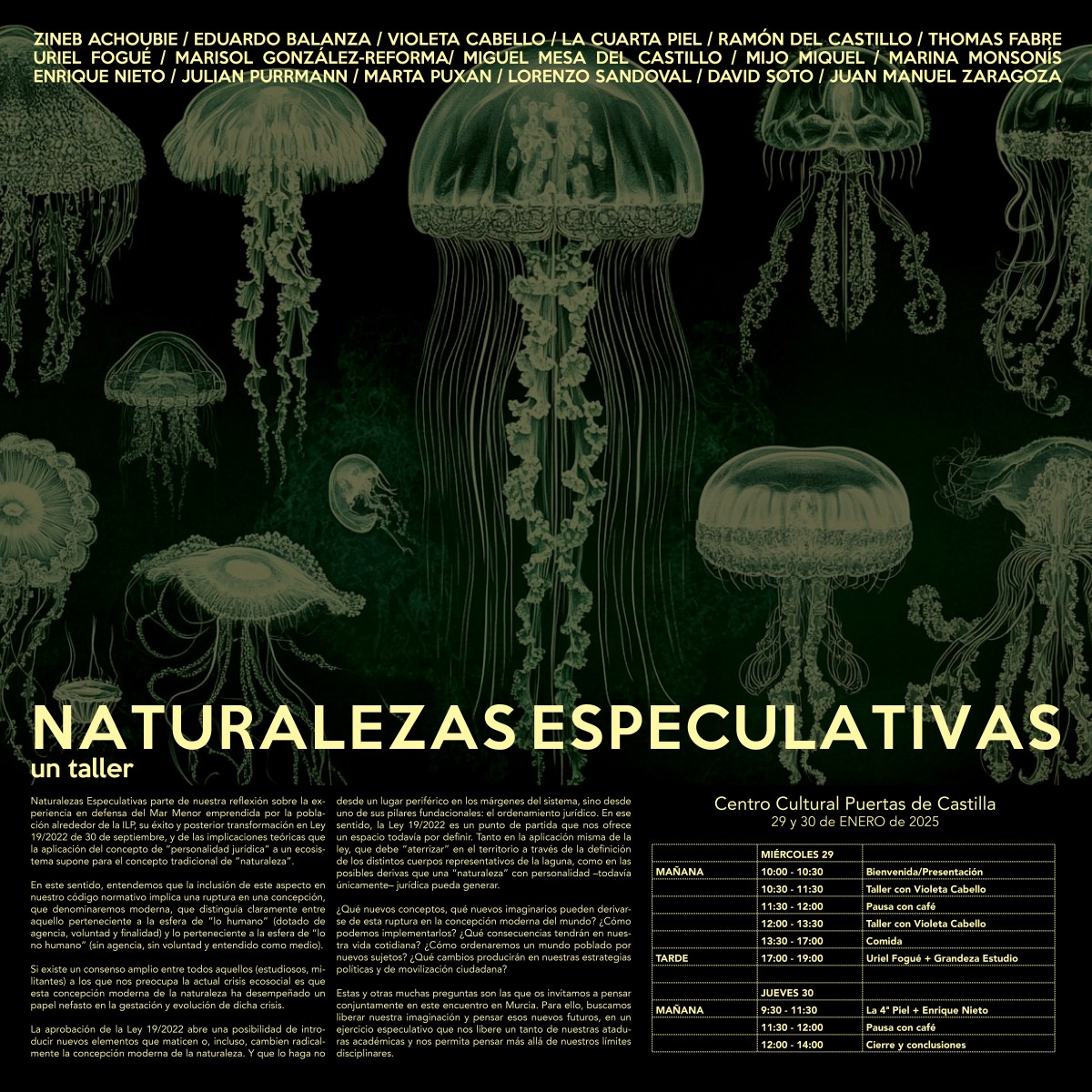
Program of the workshop Speculative Natures, organised by the ehColab in Murcia, January 2025. Author: Miguel Mesa del Castillo.
My colleagues from the ehColab in Murcia, Juanma Zaragoza and Miguel Mesa, invited me to participate the workshop ‘Speculative Natures’, organised in the frame of the Ant-Mentalhealth project, and facilitate a participatory activity. When I asked what they expected from the session, their framing was: we want to explore what it means to consider natures as people, as subjects with rights, what does it change? We are triggered by the experience of the Mar Menor being granted the legal personhood status, but we dont want to bound the session to this place.
The first thing that came to my mind was the session ‘Systems sensing in organizational complexity’ in the Transformations conference 2023 in Prague I had the pleasure to join. It was facilitated by Justus Wachs & Luea Ritter and focused on what they call systems sensing: ‘a visceral aptitude that draws on innate human capacities for being in relation with, listening deeply to, and momentarily embodying the elements of a system’. This quote is extracted from a paper they published in the Social Innovations Journal systematizing their experience, which I was immensely happy to find and get inspiration from. This post is meant to be a record of how I adapted their methodology for anyone interested in using it in the future.
A second source of inspiration was brought by Juanma, who is a huge expert in Bruno Latour. It’s the methodology developed by the consortium Où atterrir ? to explore new ways of describing territories as holobionts, by describing dependencies composing locals with distant peoples and activities, who might be threatened by those dependencies without us knowing.
Connecting these two methods, I planned a session in two parts, moving from an embodied experience towards a structured dialogue. The first part was meant to explore the question: futures in which ecosystems are people, how do they look like? Following Justus and Luea, we started with some exercises from Theory of the Oppressed to tune up our bodies and sensory capacities. Moving throughout the room, participants were invited to shift a few times back and forth from their inner attention towards the group and the room. Then they played with different walking paces and with stopping to talk with one person while keeping their attention to the group.
After warming up, we entered a guided visualization inspired in constellations as described by Justus and Luea in their paper. Participants chose a place in the room from which they jumped to another spot to visualize a concrete territory in which ecosystems are people. The exercise was repeated several times, following these questions:
- Observe: How is this territory? Where does it end? What’s in there, what beings, entities or things? How are their relations, their dependencies?
- Feel: How are you related to this territory? Are you close or far away? Are you an observer or a participant? What does this territory mean to you?
- Speculate: What resources and material, affective, political agencies do ecosystems-persons have in this territory? maybe there are people willing to take care of them, or institutions that protect them…
- Analyze: What are the resistances to ecosystems being considered and cared for as people? maybe there are groups feeling marginalized, lobbies exerting pressure, legacies of the past…
- Jump: make a movement that symbolizes for you the lever that allows this territory to exist. When you arrive, explore for a few minutes how is the path to arrive to this territory…
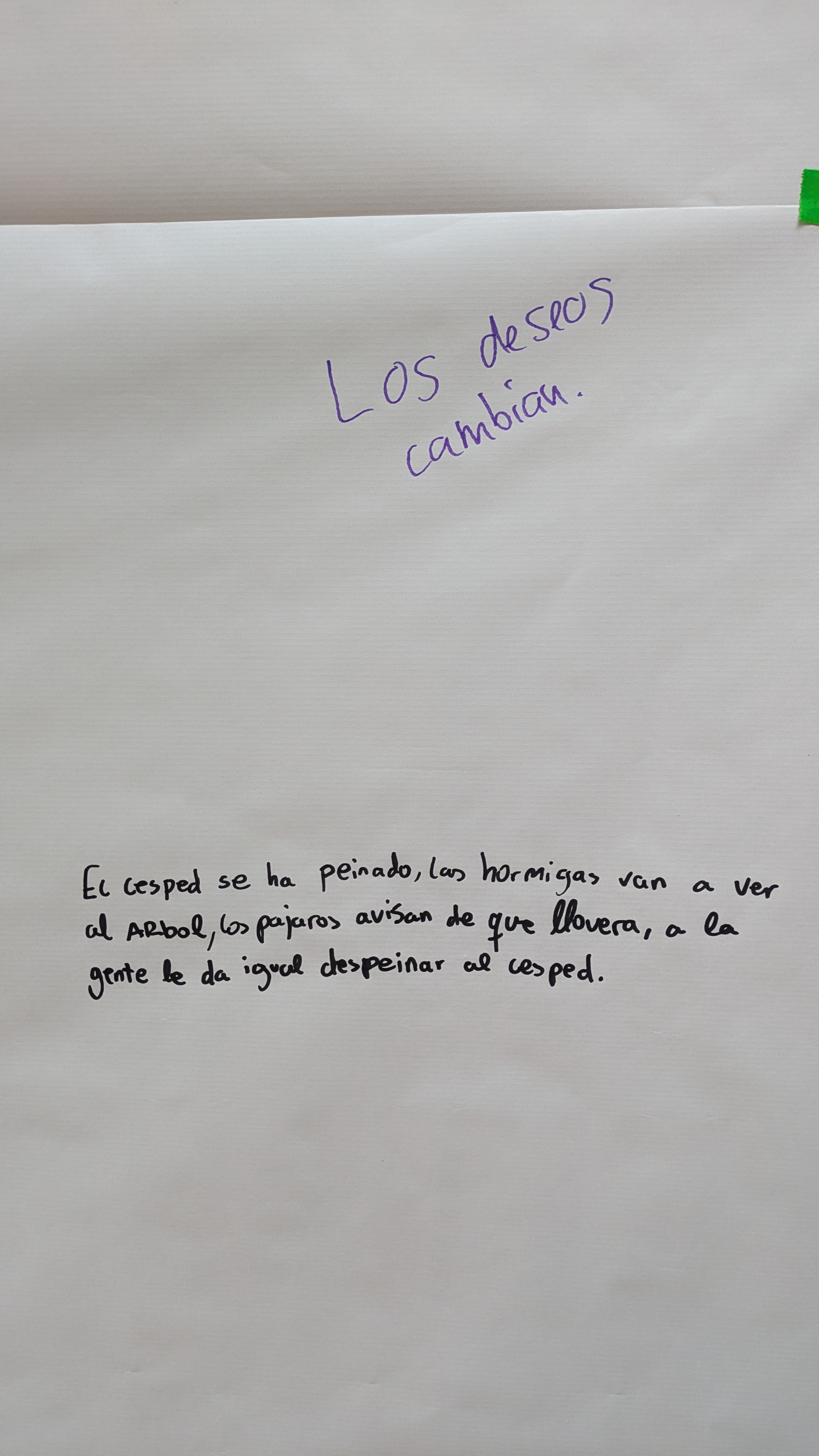
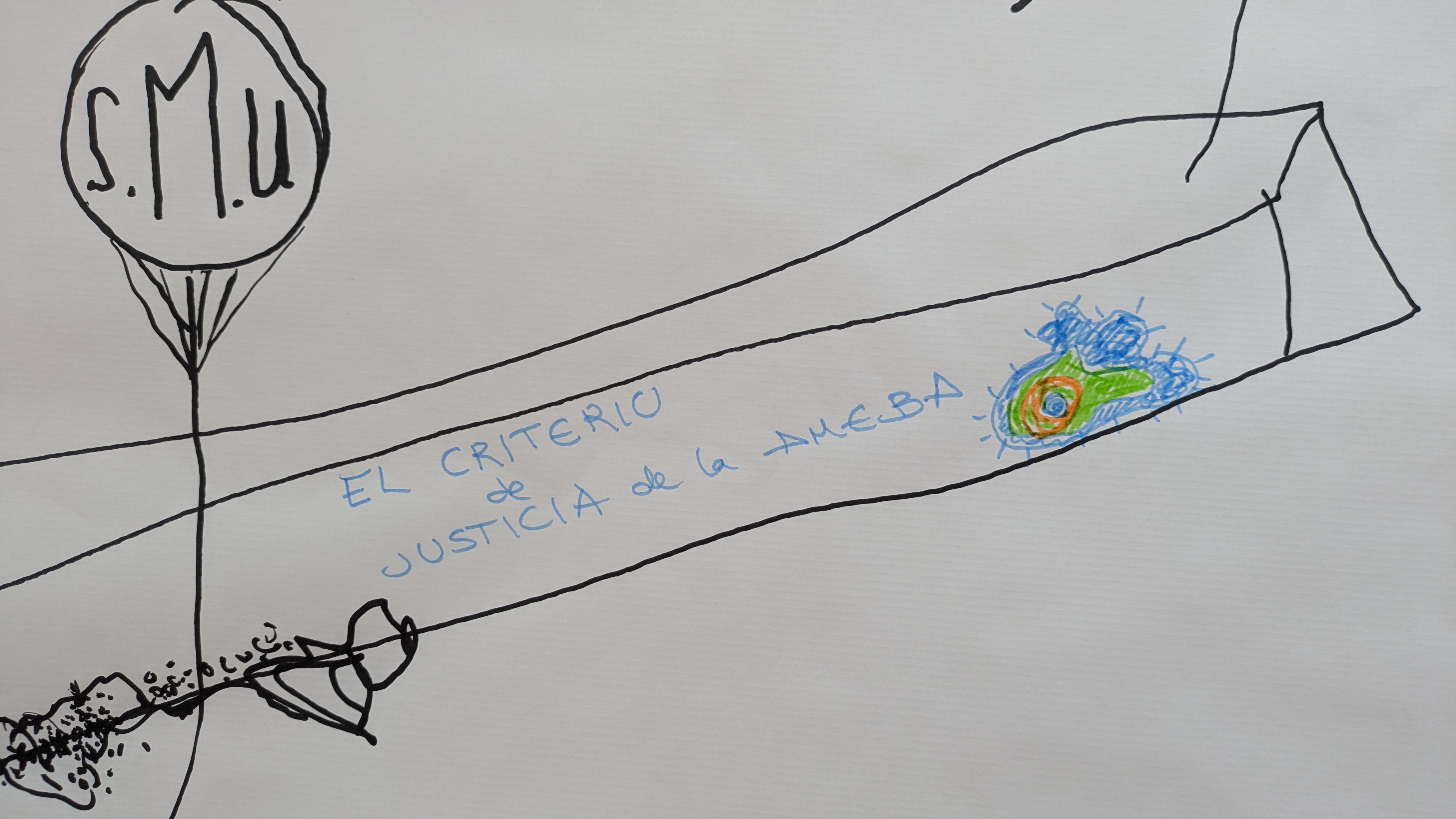
The journey was done individually and in silence. Participants could move and make noises, but the idea was avoiding talk to give space to other types of information. After the last jump, they were invited to draw together in a wall paper, still in silence, whatever they liked to capture their experience.
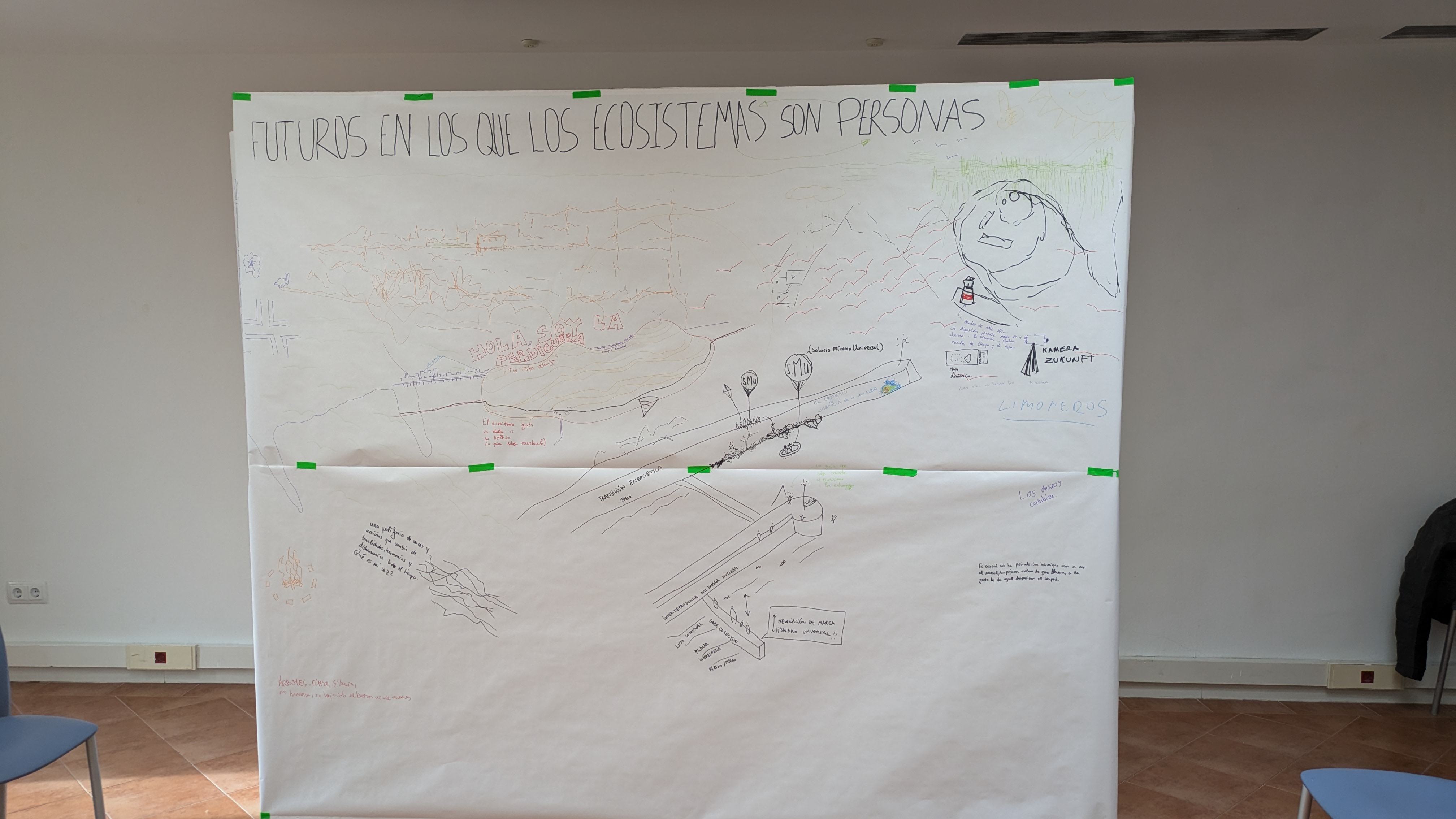
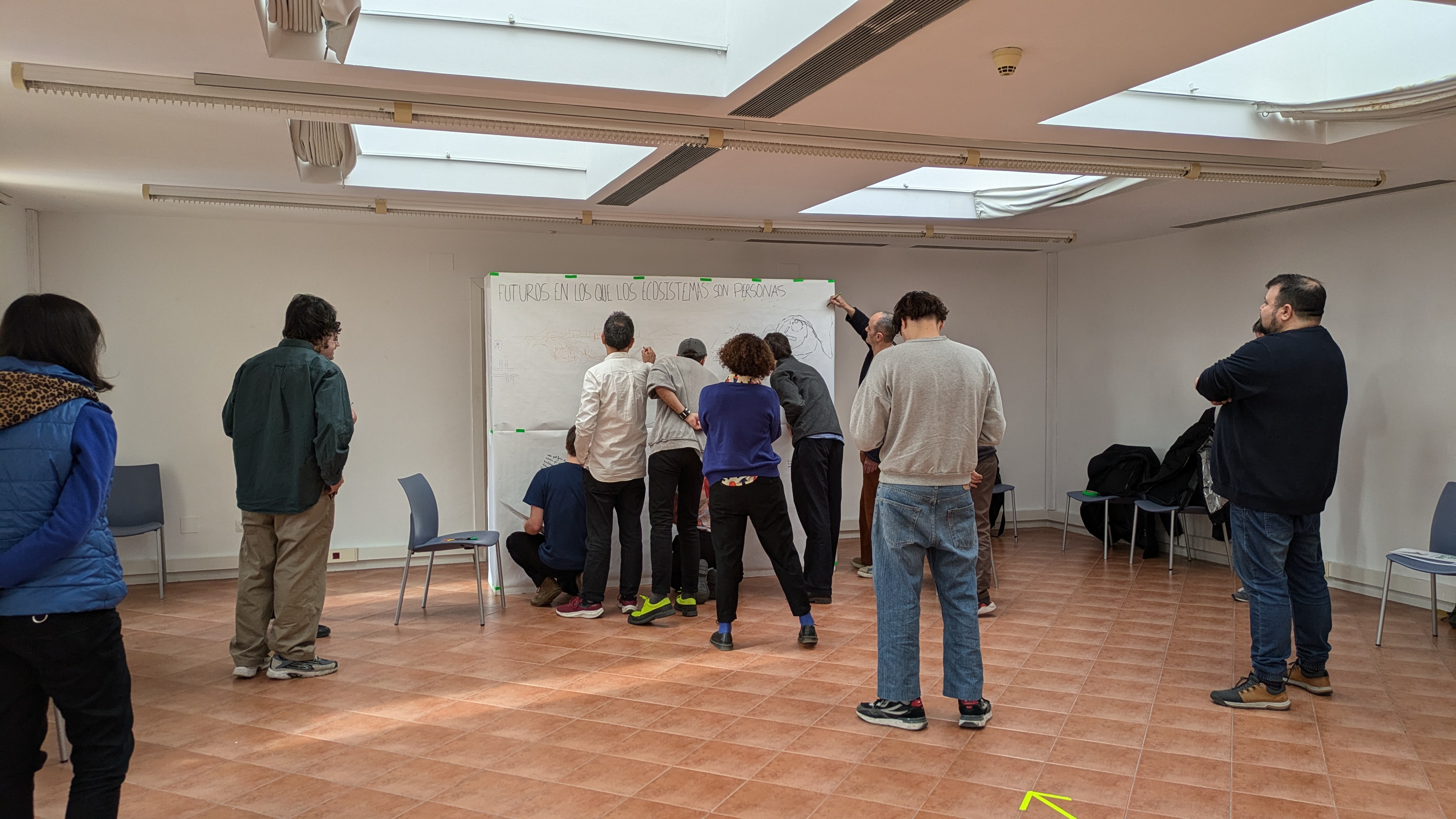
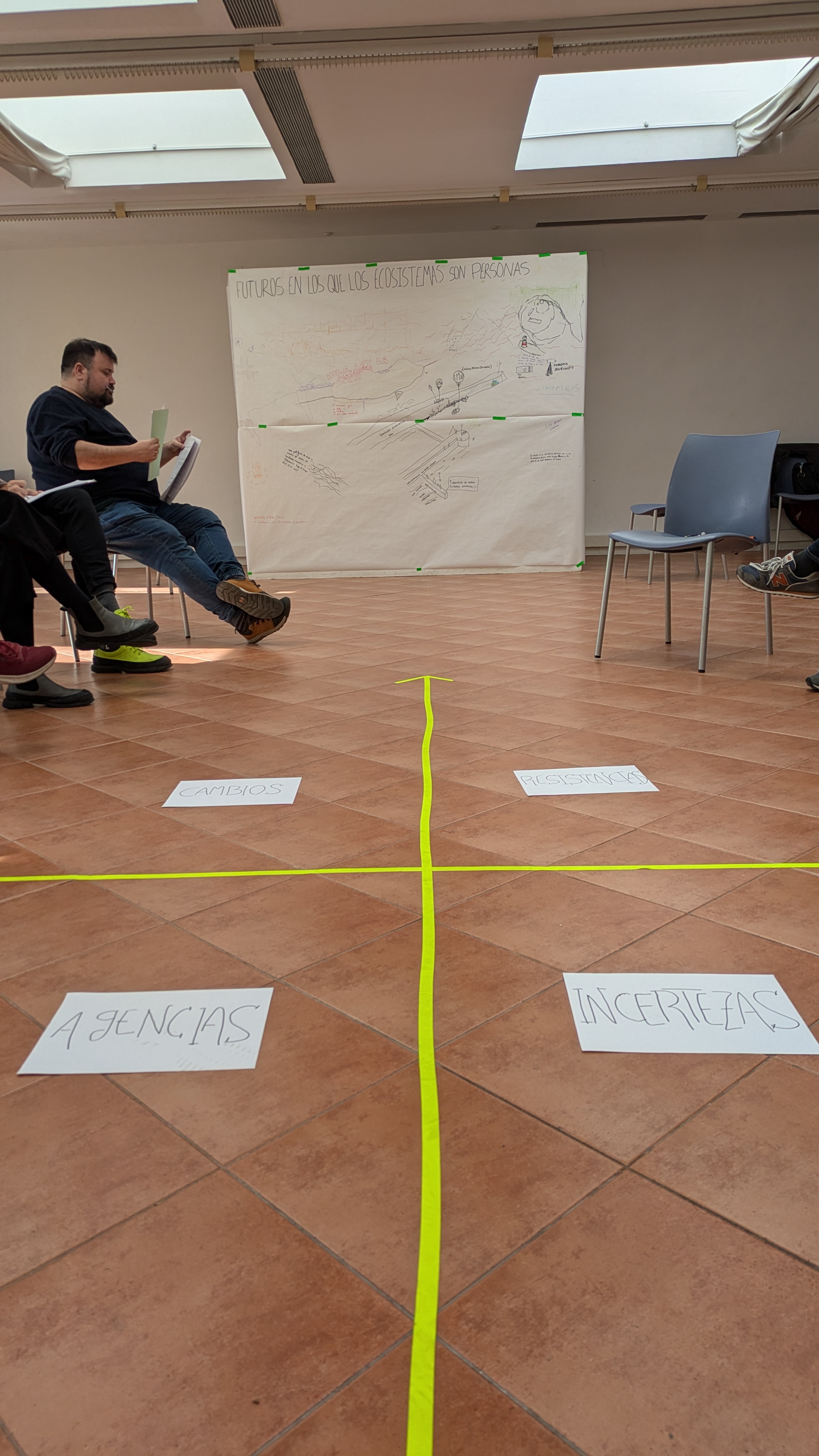
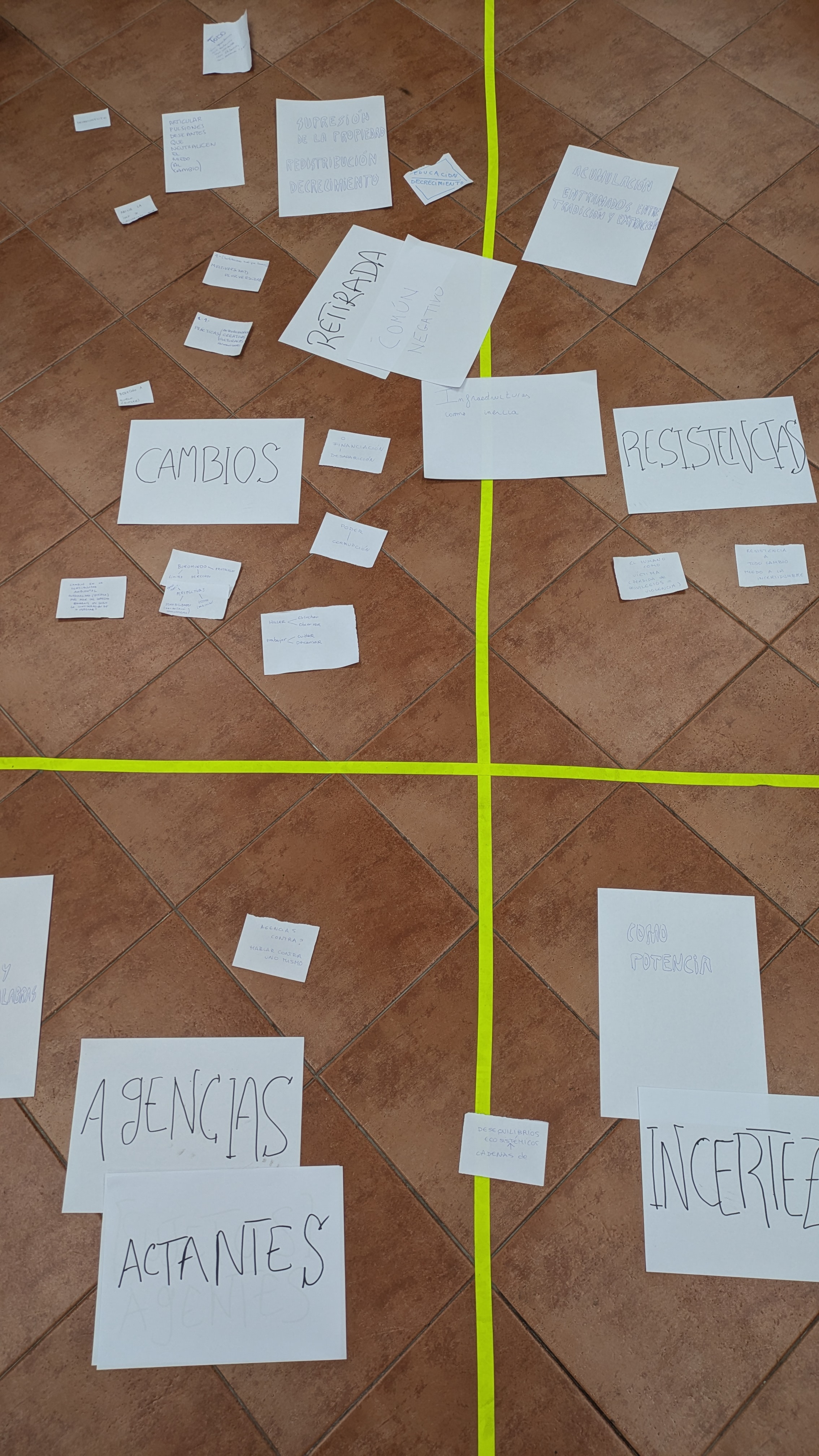
The second part opened a collective conversation about: What changes do futures in which ecosystems are people bring forth and how do we drive them forward? Here we drew on the four-quadrant method of Où atterrir ?, rephrasing categories in:
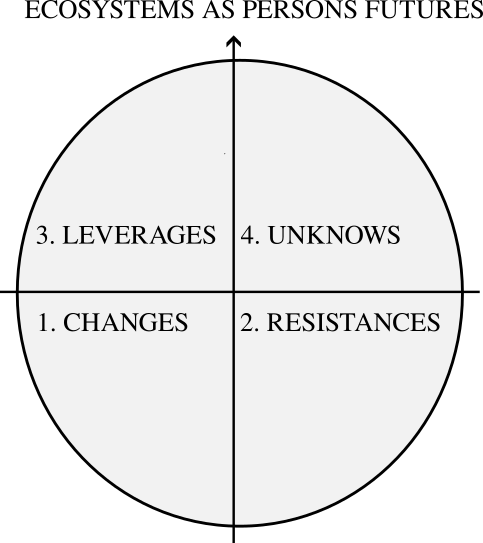
- Philosophical, political, scientific, artistic transformations
- Resistances, barriers and push backs
- Resources, agencies and actions that can be activated as levers
- Uncertainties, known unknowns, questions that arise
We spent some time discussing and reframing the categories before entering the conversation. I did not audio record and cant really summarize the discussion 2 months later. I recall the 1 hour time felt quite short, as there’s much to discuss on this new matter of concern. I also remember one of the final sentences from Juanma, that really gives me hope: to me, this changes everything.







 Violeta Cabello