
The illustrated outcome of/ Las ilustraciones de Shared Dialogues / Diálogos Compartidos
What this is
*Ecotono(s)* is a compilation of twenty illustrated stories that gathers years of fieldwork in the Mar Menor — interviews, focus groups, and a co-research process with local actors — into a different register than an academic paper allows: images, voices, and scenes that sit with the ecological degradation and social conflict around the lagoon rather than explaining it away.
*DOWNLOAD* the full book in English, French
*DESCARGA* el libro Ecotono(s) en Español.
The four ecotones
The book takes its title from “ecotones,” the transition zones where ecosystems overlap. Here the word became a way of organising twenty stories into four such zones, each holding together voices and perspectives that don’t always agree, illustrated throughout by artist Josune Urrutia Asua.
Inhabiting land and ocean
Stories of people whose daily lives sit directly on the land–sea boundary — farmers, fishers, and others whose work and identity are shaped by the Campo de Cartagena and the lagoon itself.
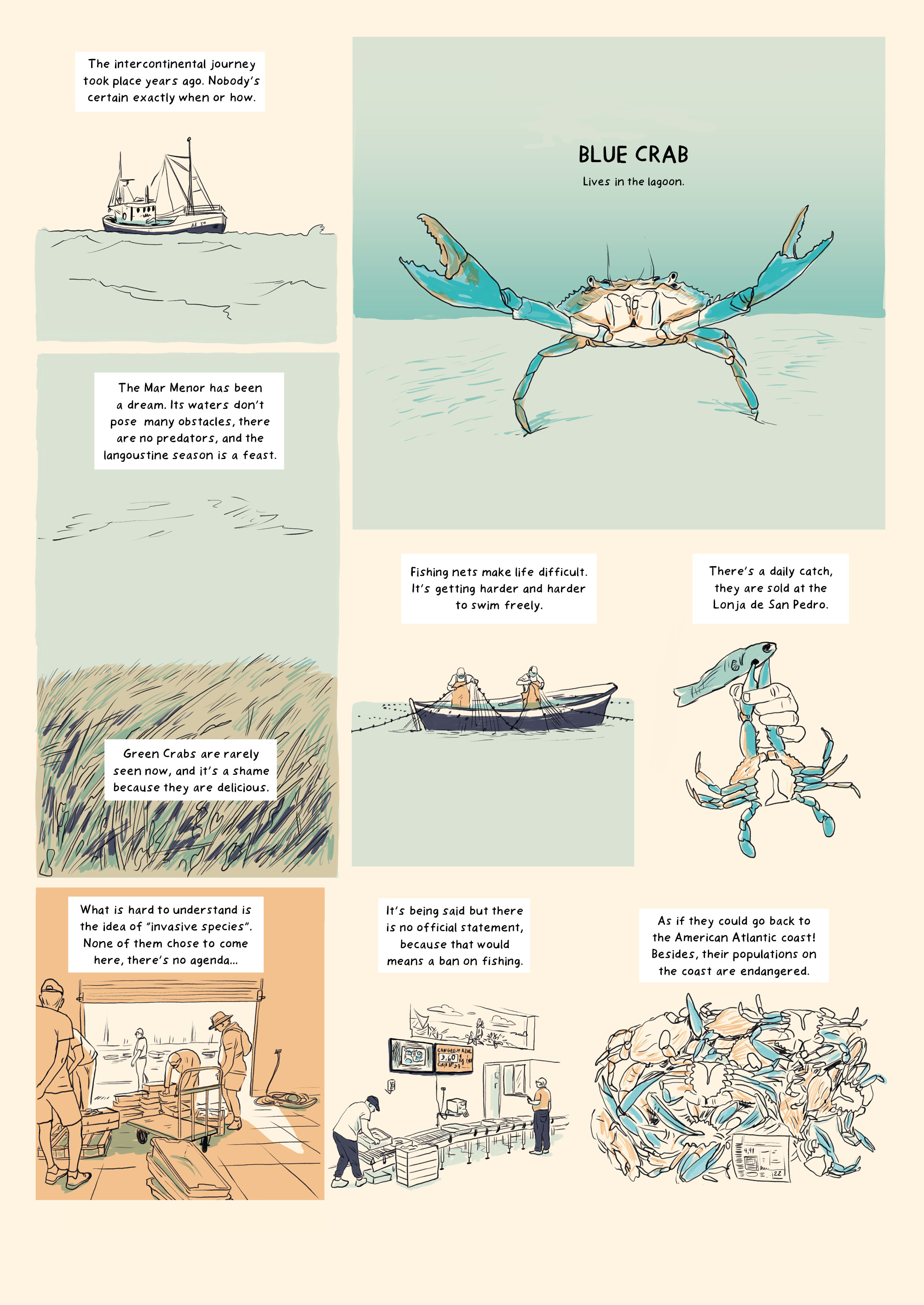
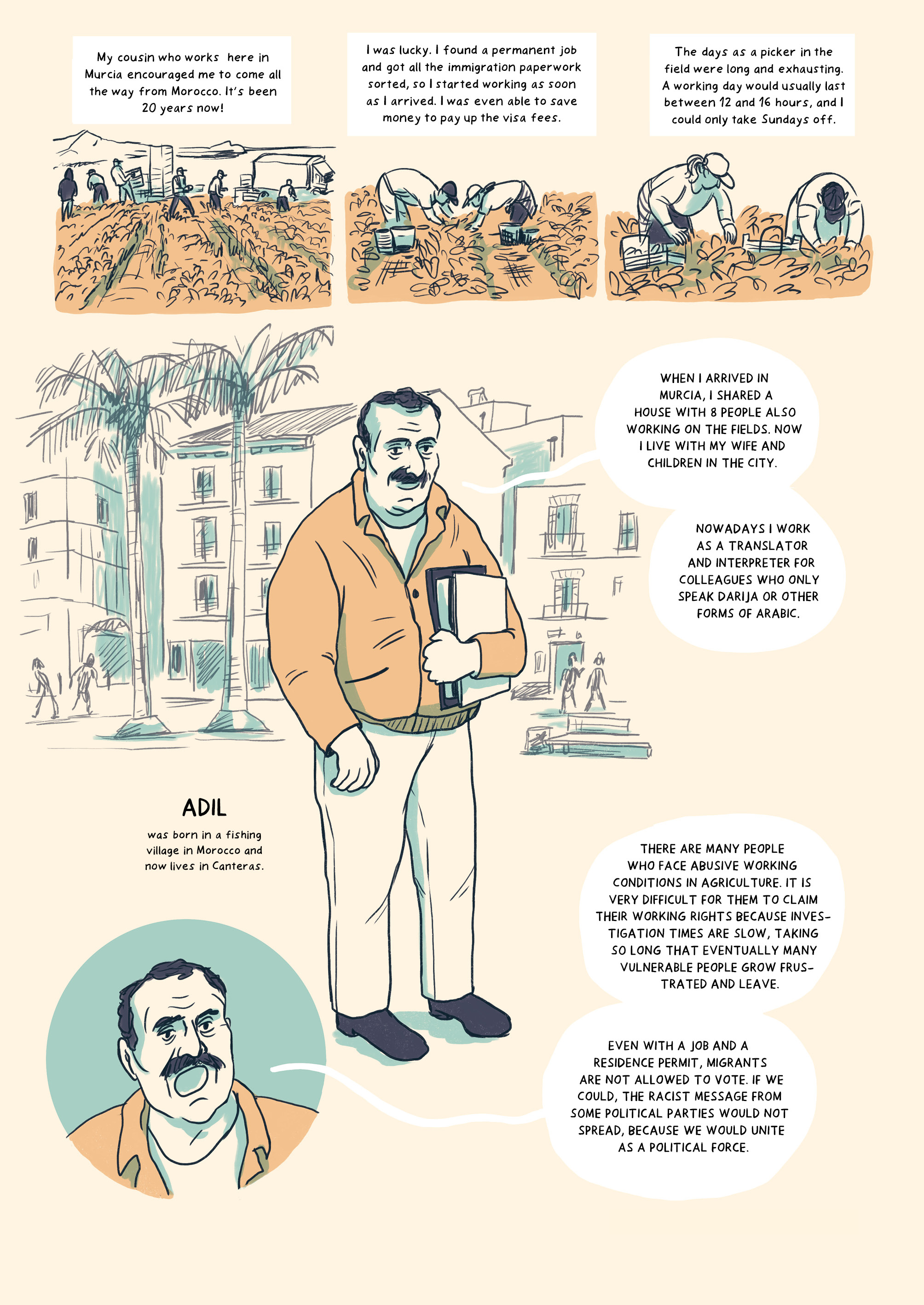
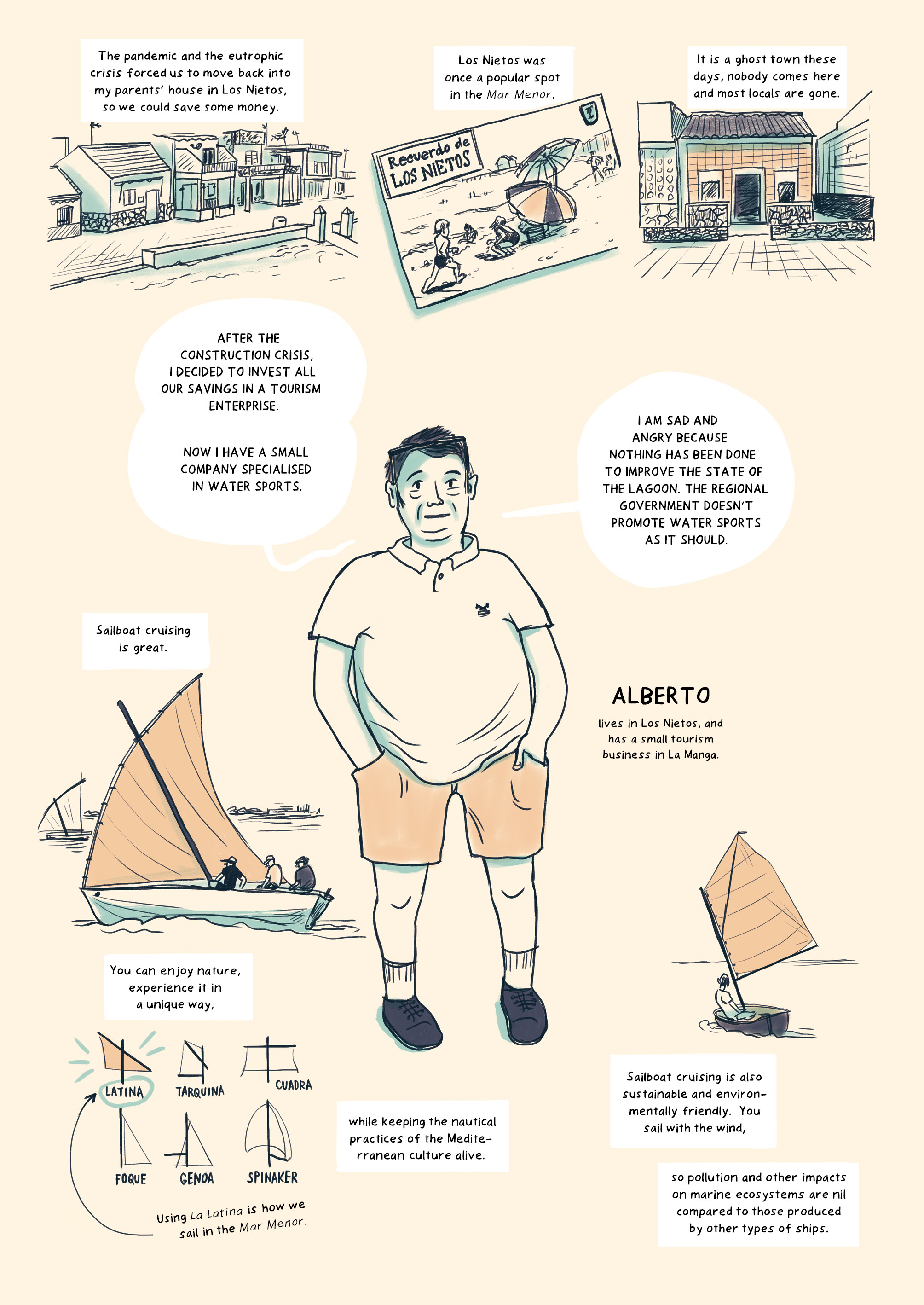
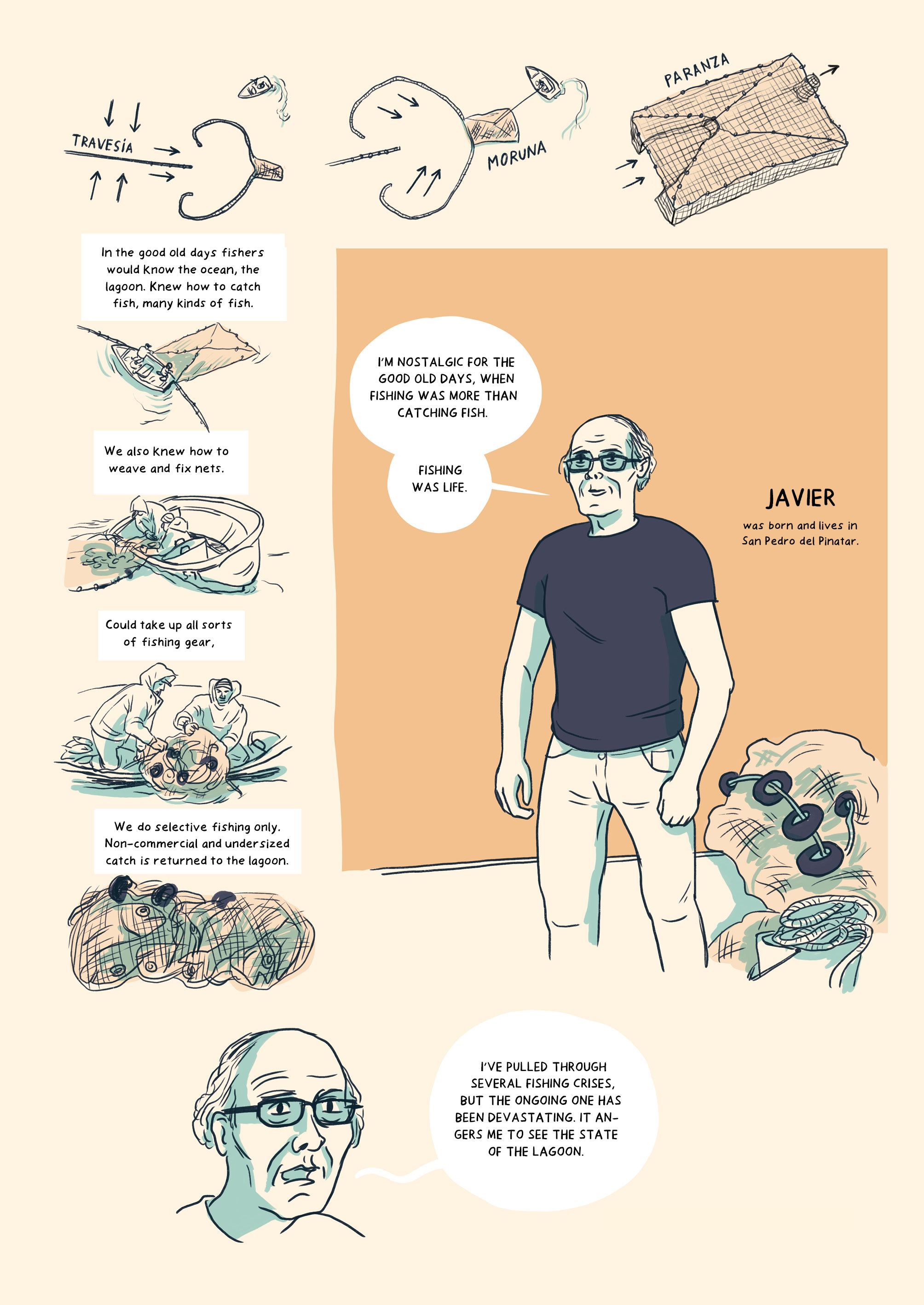

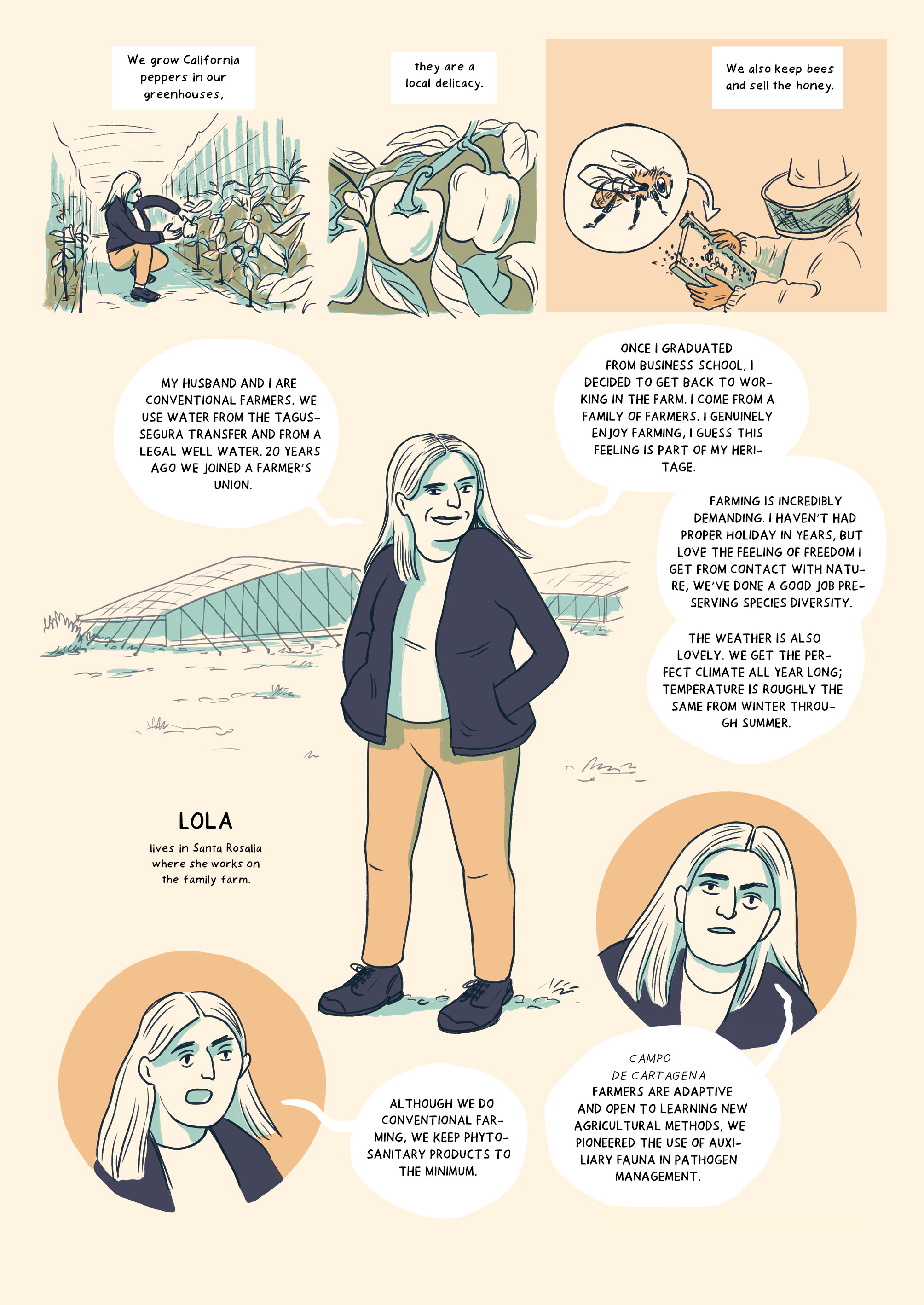
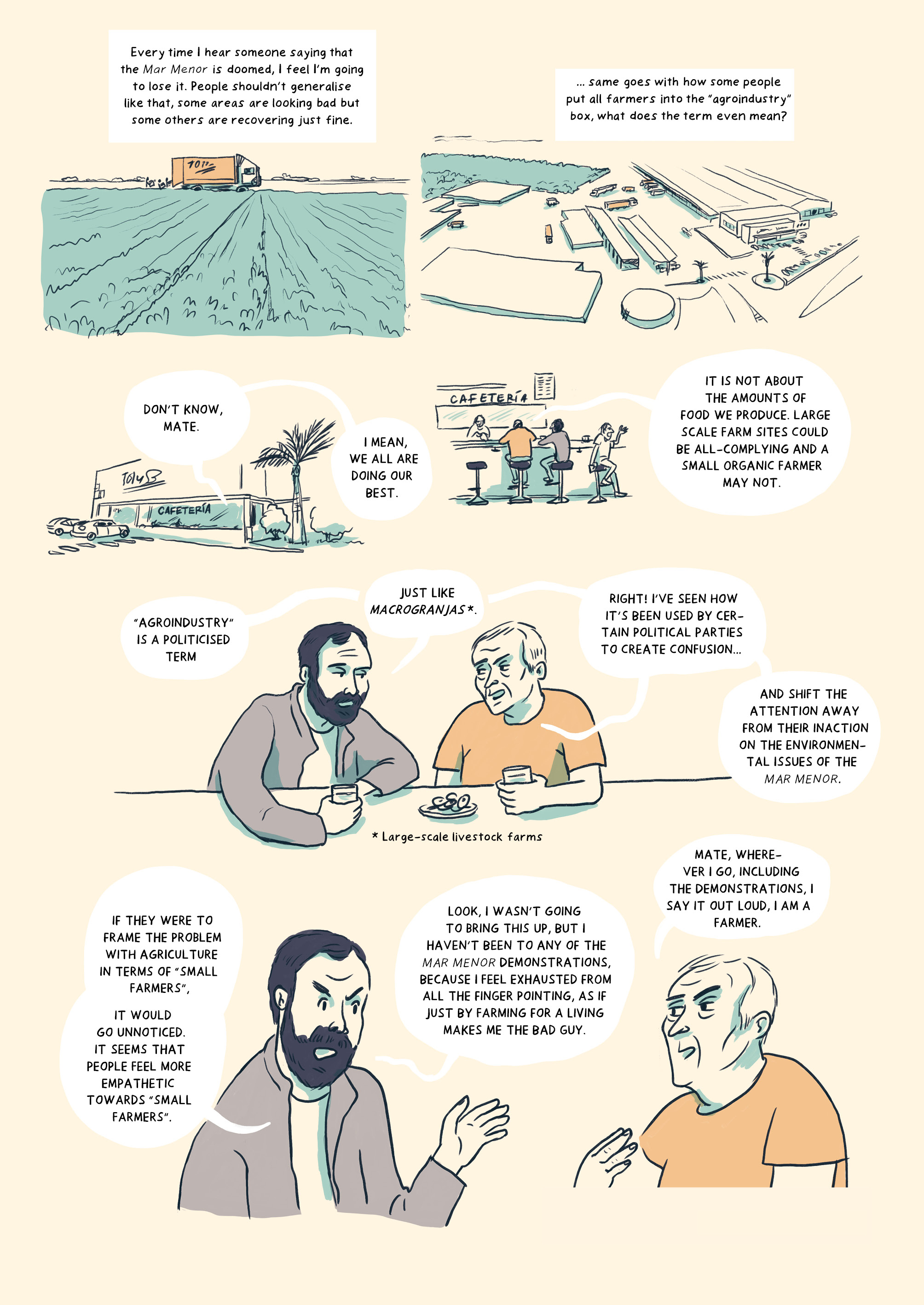
In contradiction
Stories that sit inside the sharpest disagreements around the Mar Menor’s crisis — competing accounts of blame, responsibility, and what justice for the lagoon could look like, including its unprecedented legal personhood.
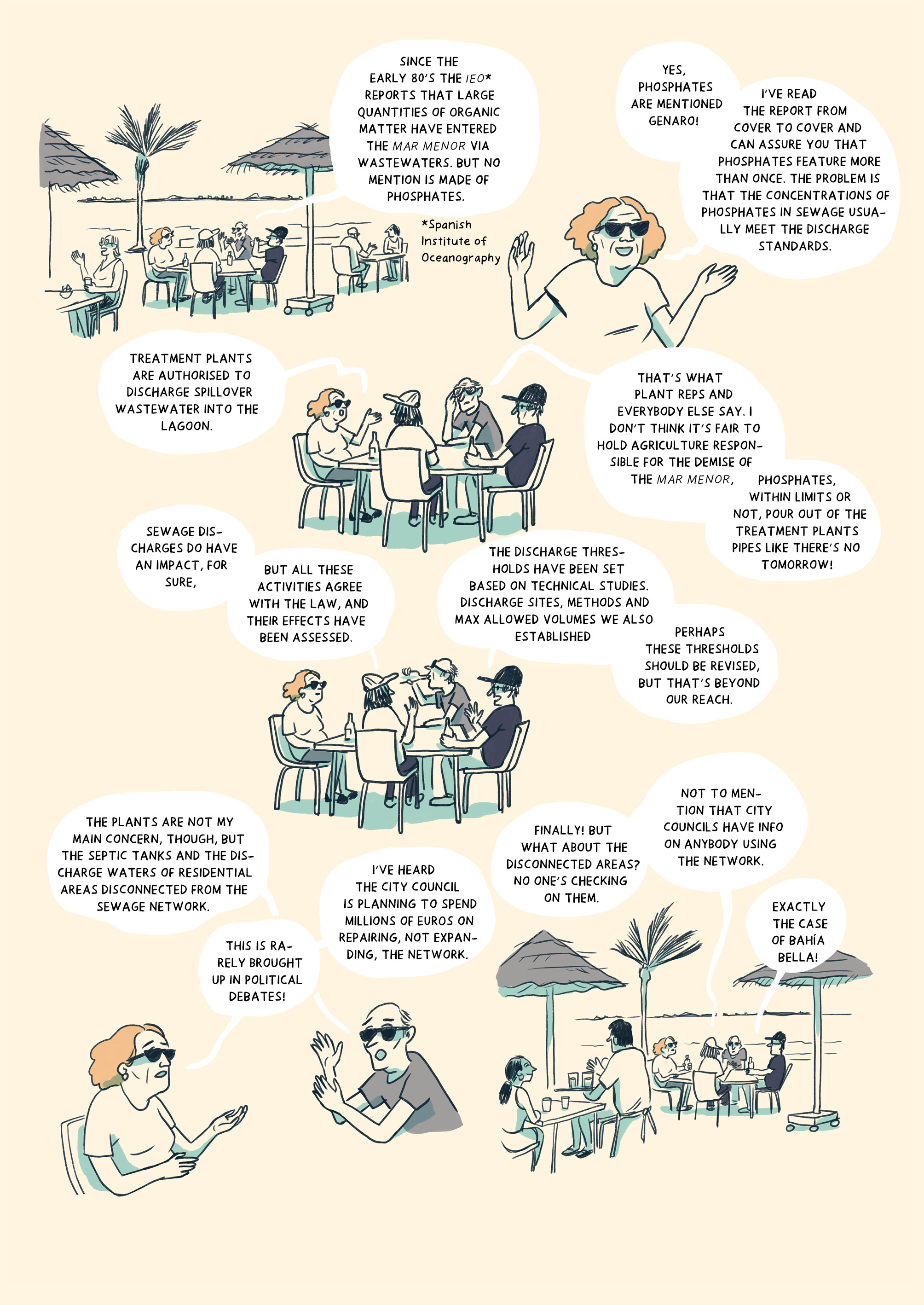

Feeling the lagoon
Stories that stay with the emotional weight of watching the Mar Menor change — grief, attachment, and the harder-to-name feelings that rarely make it into policy debates.
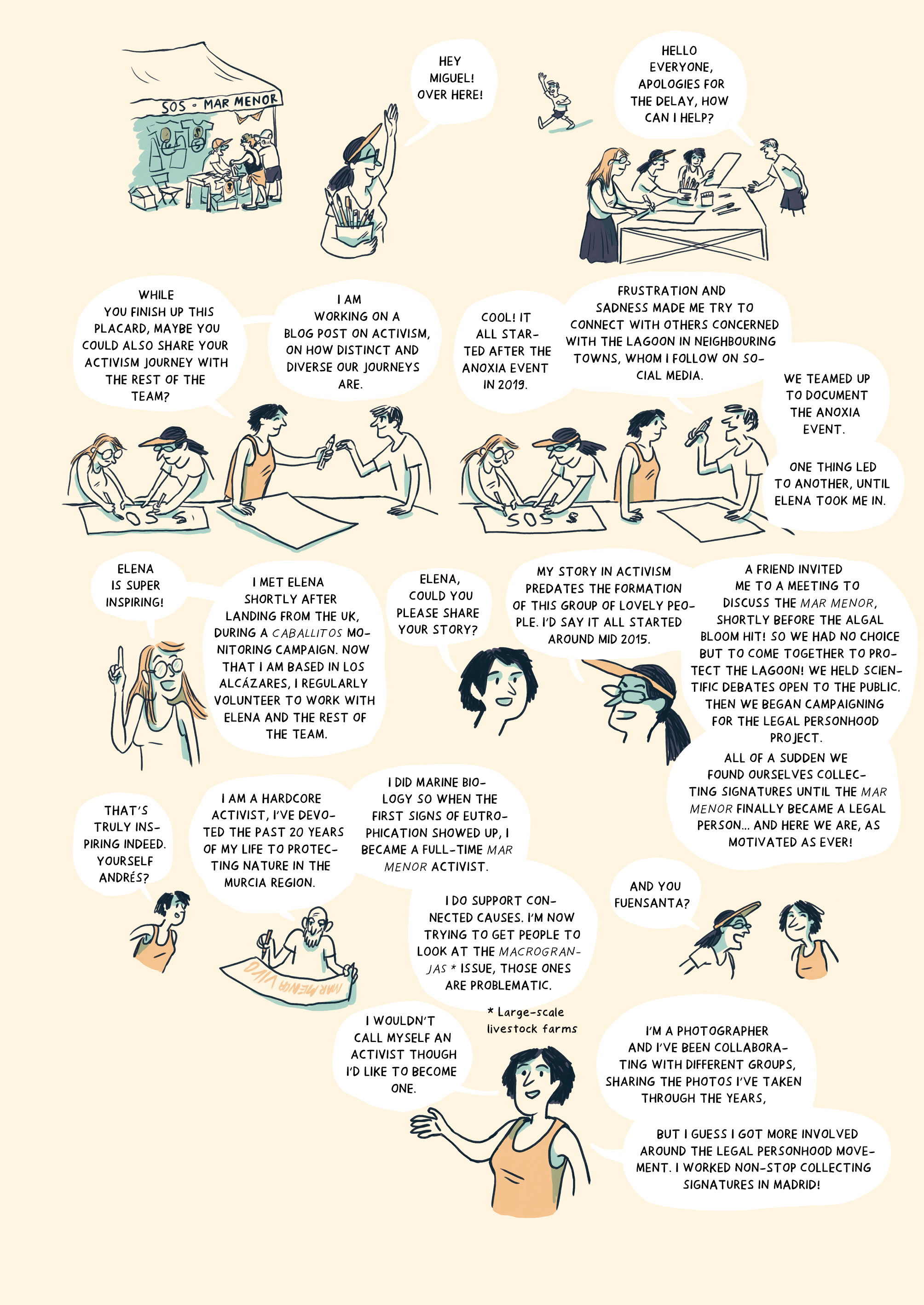

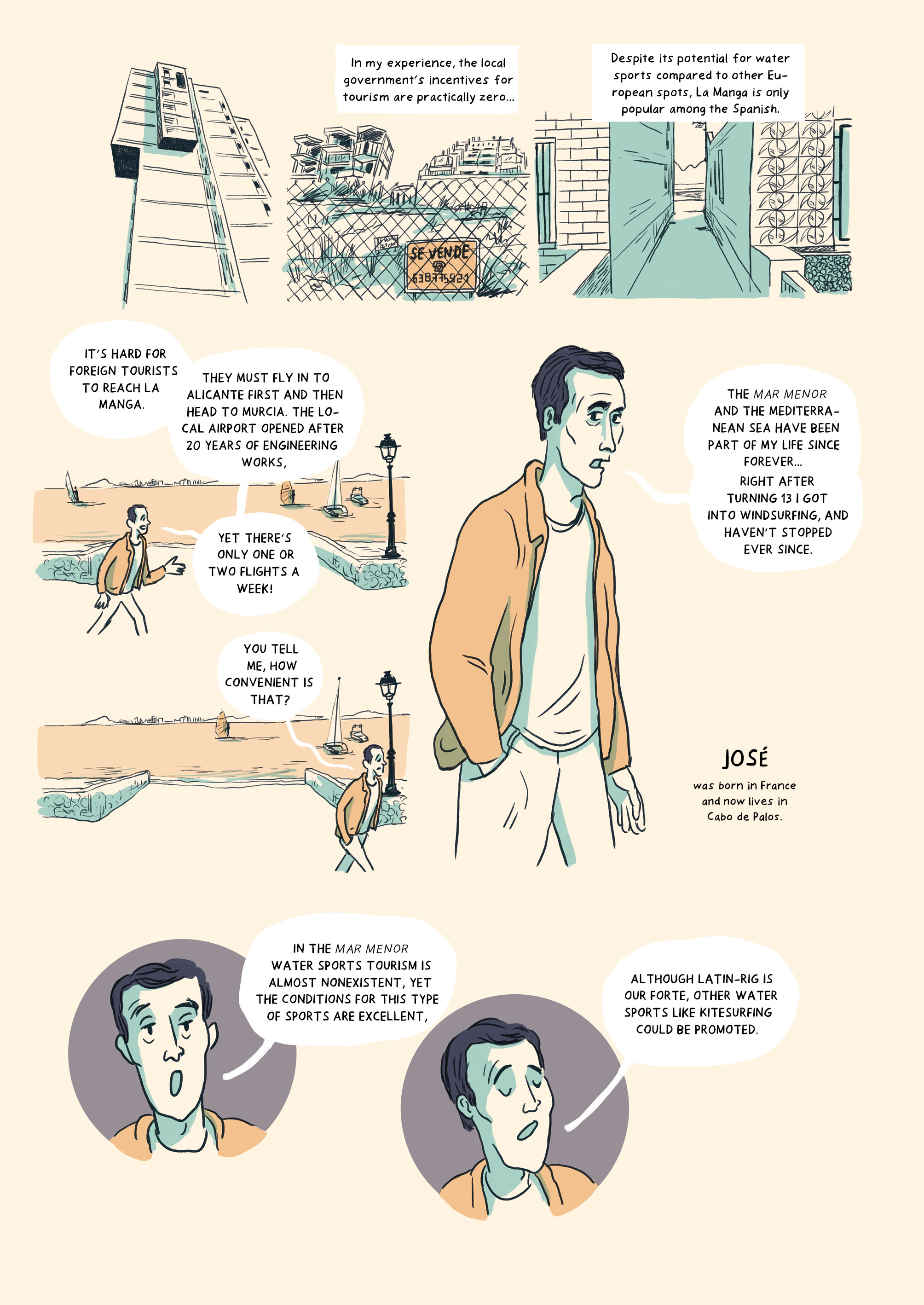

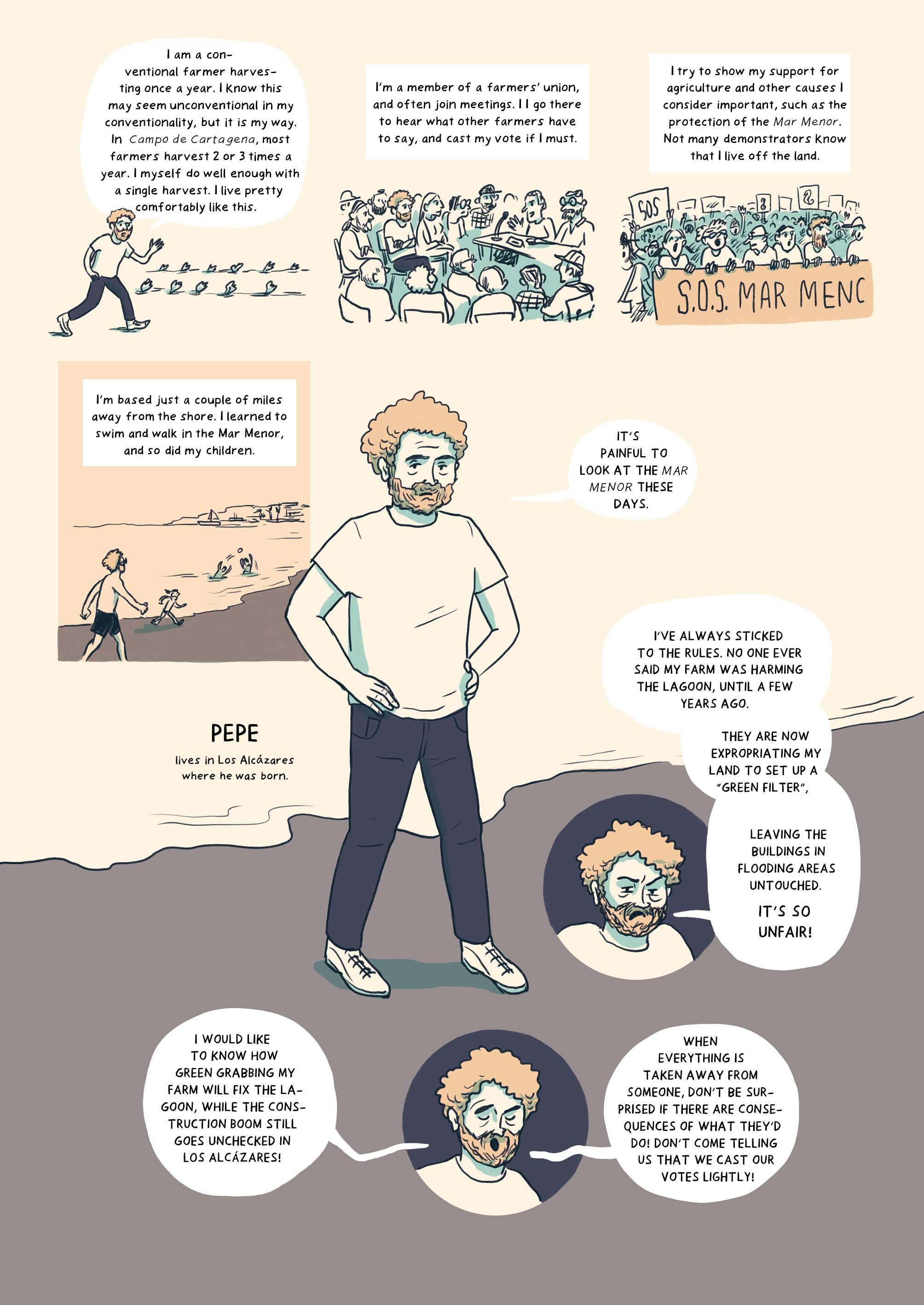
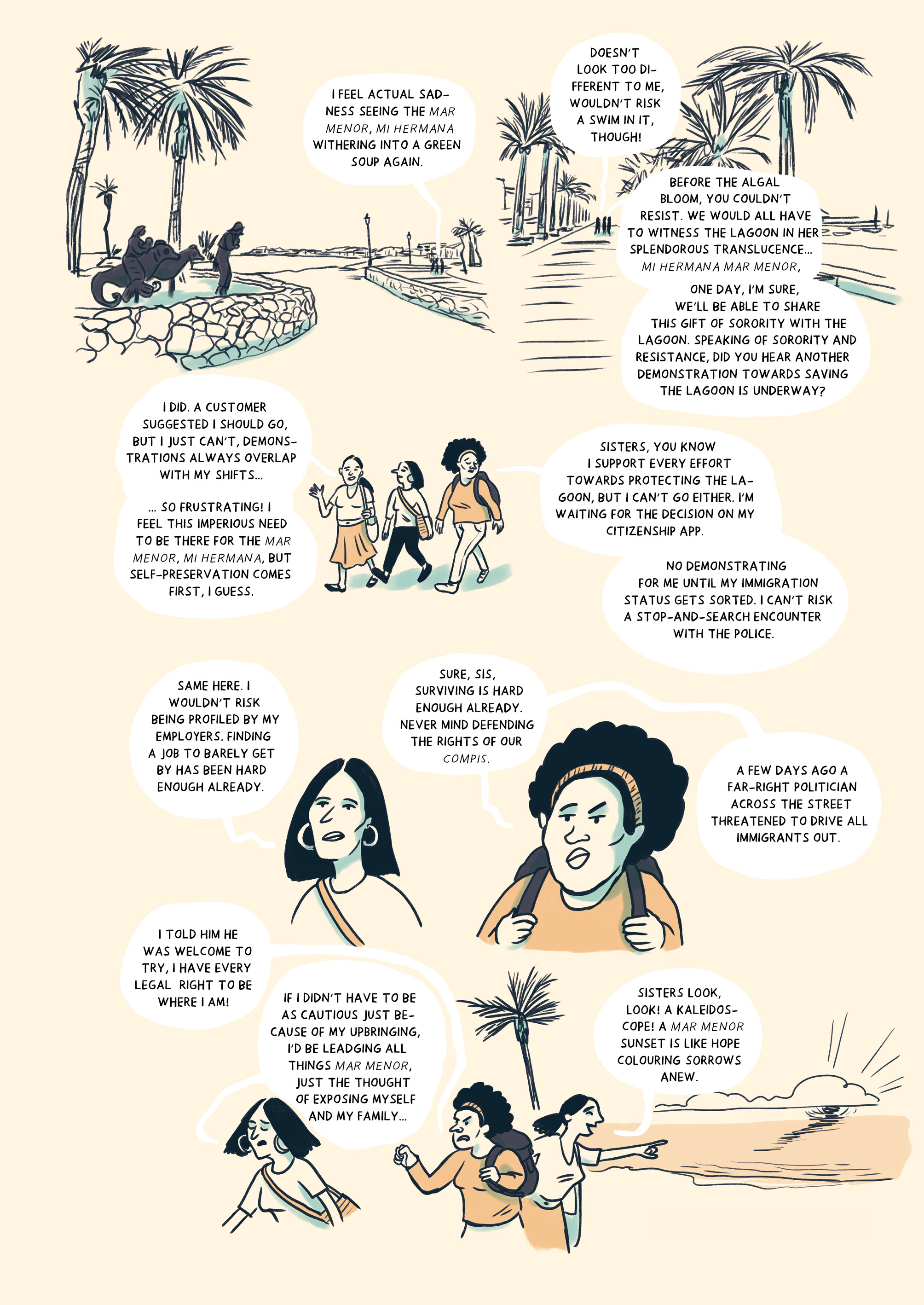
Shared reflections
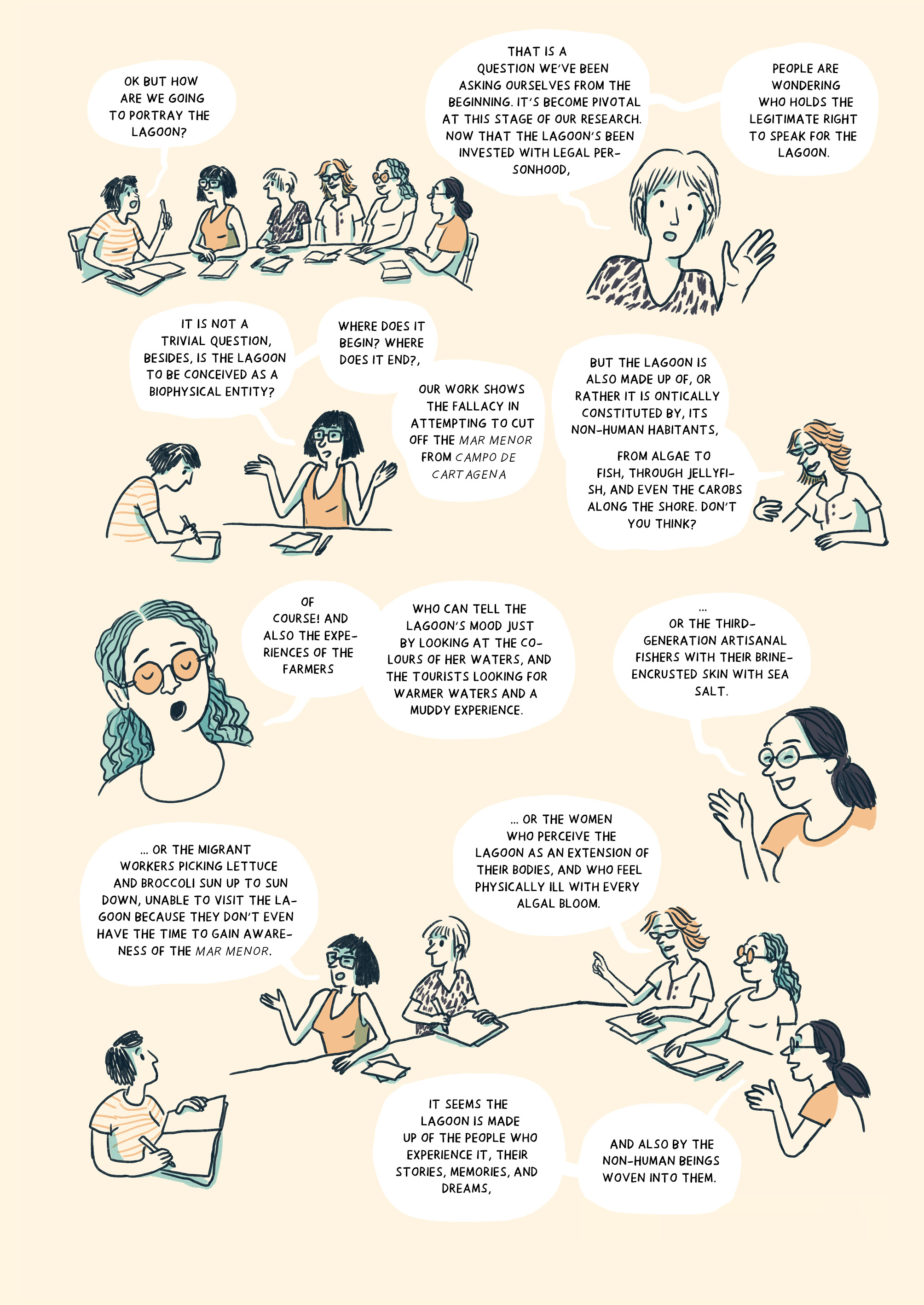
Stories that step back to ask bigger questions together — who gets to speak for the lagoon, how can people talk about difficult matters and what a shared future for the Mar Menor could look like.


How it was made
The stories were developed through the co-research process described on the Shared Dialogues project page: 28 life-story interviews, a year-long dialogue group of local actors, and a final co-creation phase in which researchers and illustrator worked together to translate the material into twenty visual narratives, refined with local actors before publication. Both the story and its characters were fictionalized based on the many dialogues and reflections we had in the Mar Menor territory.
Credits
Illustration and design: Josune Urrutia Asua.
Co-edited by: Paula Andrea Zuluaga-Guerra, Violeta Cabello Villarejo, Marcela Brugnach, Maria Mancilla Garcia, and Paula Novo.
Public presentation: Puertas de Castilla cultural centre, Murcia. Closing seminar with a panel of five environmental researchers working with visual arts.
Editions and access
Published in 2023 (Another Press; ISBN 978-1-7395072-1-3; CC BY-NC-SA 4.0), and translated into English and French. 500 copies across the three language editions were printed and distributed to public libraries, conferences, and outreach events across Spain and other EU countries.
## Funding
This work was funded by the UK Government’s Research England Policy Support Fund and Participatory Research Fund (2022–23), and recevied support from Spain’s Ministerio de Ciencia e Innovación through the Juan de la Cierva programme (MCIN/AEI/10.13039/501100011033) and the Ramón y Cajal programme (RYC2021-031626-I); the María de Maeztu excellence accreditation programme 2023–2027 (CEX2021-001201-M); the Basque Government’s BERC 2022–2025 programme; and the European Commission’s Horizon 2020 Marie Skłodowska-Curie Innovative Training Network NEWAVE – Next Water Governance (grant agreement No. 861509).

